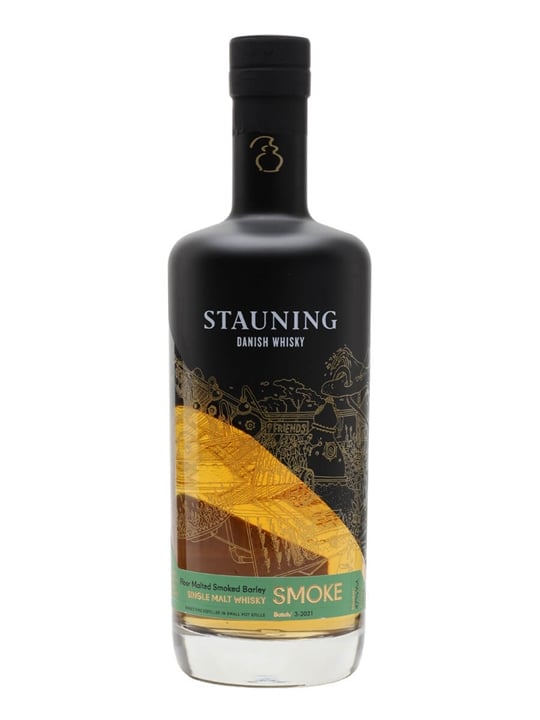

Stauning began with nine friends, a butcher shop, and a stubborn conviction that Denmark could make whisky on its own terms. They taught themselves to floor-malt barley by hand, to peat it themselves, to run small direct-fired copper stills — every inefficient, laborious old technique the industry had largely abandoned — because those techniques produced a whisky that tasted like no one else's.
Stauning Smoke is the expression where that philosophy shows most plainly. The barley is grown locally in West Jutland and floor-malted in house, then smoked over Danish peat before it ever sees the still. The result is a single malt that carries its smoke differently from Islay — drier, woodier, with a North Sea coastal edge rather than the medicinal iodine of the Hebrides.
The nose arrives in layers: woodsmoke first, then smoked barley, brine, green apple and a curl of old leather. The palate is where Stauning really talks — bonfire embers, smoked pear, a thread of honey, black pepper and that mineral salt edge that tells you the sea is not far away. The 47% strength holds everything upright without harshness. The finish is long, savoury and smoky, dry oak and lingering ash giving way to a last quiet sweetness of malt.
Stauning Smoke is not a copy of anything. It is a Jutland whisky — patient, hand-built, defiantly local — and it tastes unmistakably of the cold flat country it came from. For anyone who thinks the smoky whisky conversation begins and ends in Scotland, it is a quiet, necessary correction.