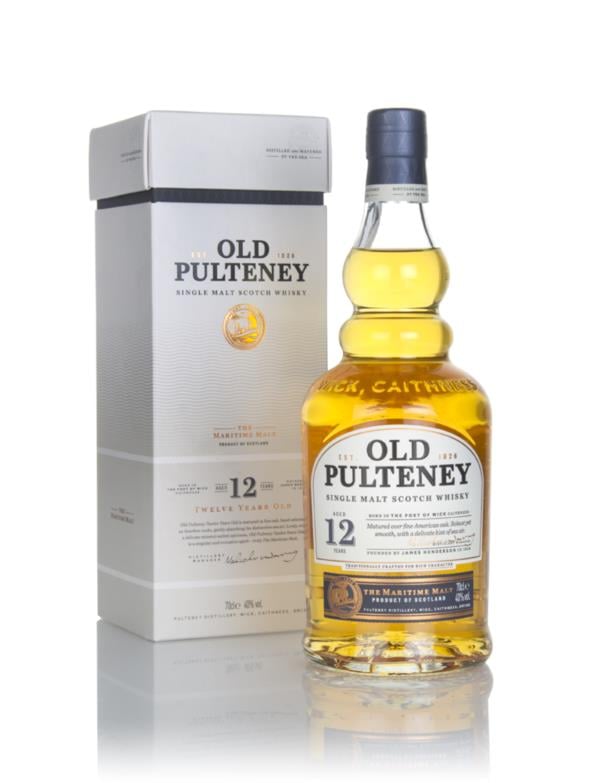

For a long stretch of the 1990s and 2000s the 12 Year Old was Old Pulteney's calling card. It came in the round-shouldered bottle that mimicked the boil ball of the wash still, was bottled at 40%, and sold for less than most other Highland twelves on the same shelf. It was — and on back bars still is — the easiest way to learn what makes Wick's distillery distinctive.
That older 40% version is a different drink to the current core 12. The lower strength gives it a softer, more polite presentation, but the underlying character is still recognisable: a clean bourbon-cask base, a light malty middle, and the saline thread that the boil-ball still seems to push into everything Pulteney makes. Without chill-filtration the texture would have been fuller; as bottled it is brisk and approachable, which is probably what the marketers wanted from an entry-level Highlander in that period.
Pulteney was founded in 1826 to feed the herring boom that turned Wick into one of Europe's busiest fishing ports. When the boats stopped coming and the town imposed prohibition on itself in 1922 — a temperance vote driven by the fishing crews' habit of drinking the place dry — the distillery closed. It only reopened in 1951 under Robert Cumming, and the modern brand has been built since the 1990s under Inver House. The old 12 was the bottling that did most of the rebuilding.
Bottles still surface at auction and on dusty shelves. As a piece of distillery history, and as a quietly enjoyable everyday Highland malt, it is worth picking up.