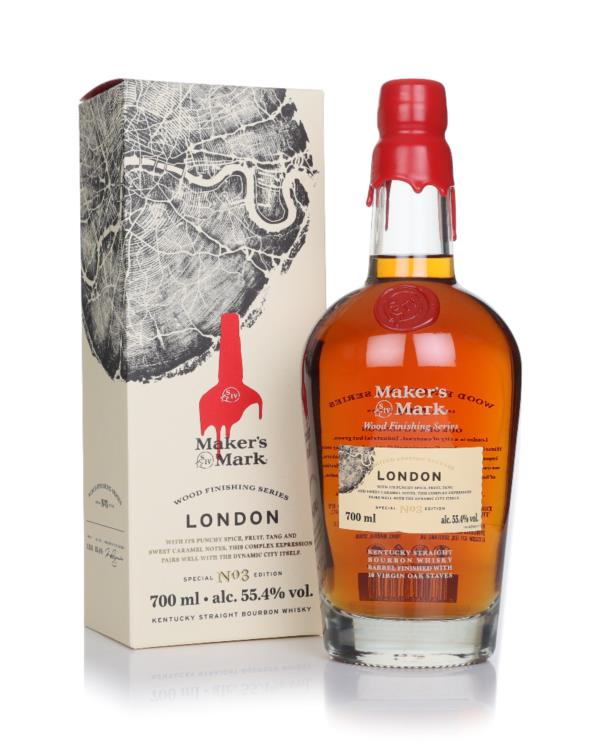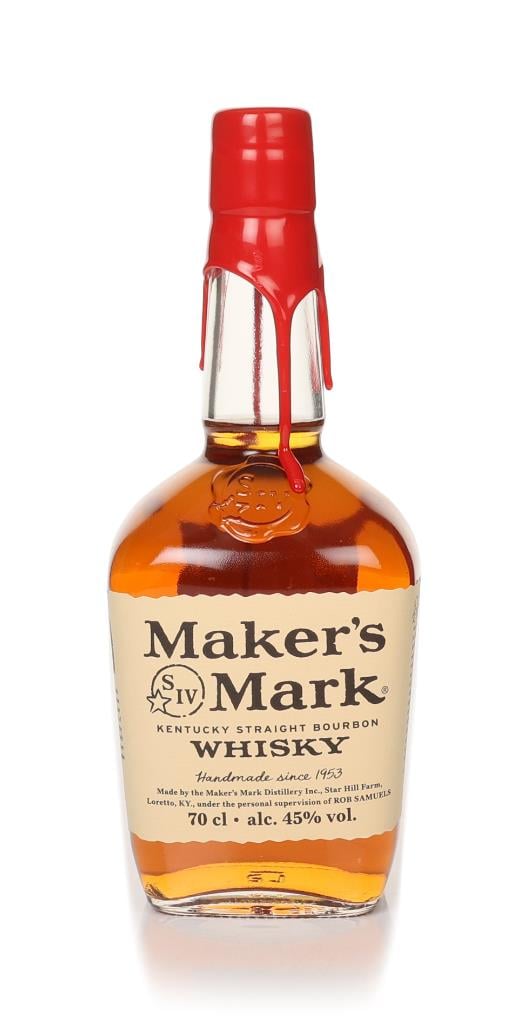

Maker's Mark BEP — short for Barrel Entry Proof — was released in 2020 as the second bottle in the distillery's Wood Finishing Series. The whole series is designed to answer questions the Samuels family have been quietly tinkering with for decades, and BEP's question is a technical one: how does the proof at which bourbon enters the barrel affect its final character?
Most modern bourbon enters the barrel at 125 proof, the legal maximum. Maker's Mark has long used 110 proof, which is unusually low and is considered one of the reasons their bourbon leans so soft and round. BEP explores what happens if you take fully matured cask strength Maker's Mark and finish it using custom virgin French oak staves specifically chosen to replicate the flavour profile that would have come from an even lower barrel entry proof.
The finishing staves spend several weeks in the barrel inside Maker's Mark's limestone cellar, the coolest part of the rickhouse, which slows the extraction and keeps the character measured rather than aggressive. The whiskey is then bottled at cask strength, typically around 108–110 proof.
The result is classic Maker's Mark turned up in volume and in texture. The wheat still does the talking — soft, honeyed, bakery-warm — but the French oak adds a layer of spice and finesse that the core Maker's profile does not normally show. It is a thoughtful, experimental bottle that rewards close attention, and a fine snapshot of where the Samuels family have been pointing Maker's Mark since Rob Samuels took the reins.