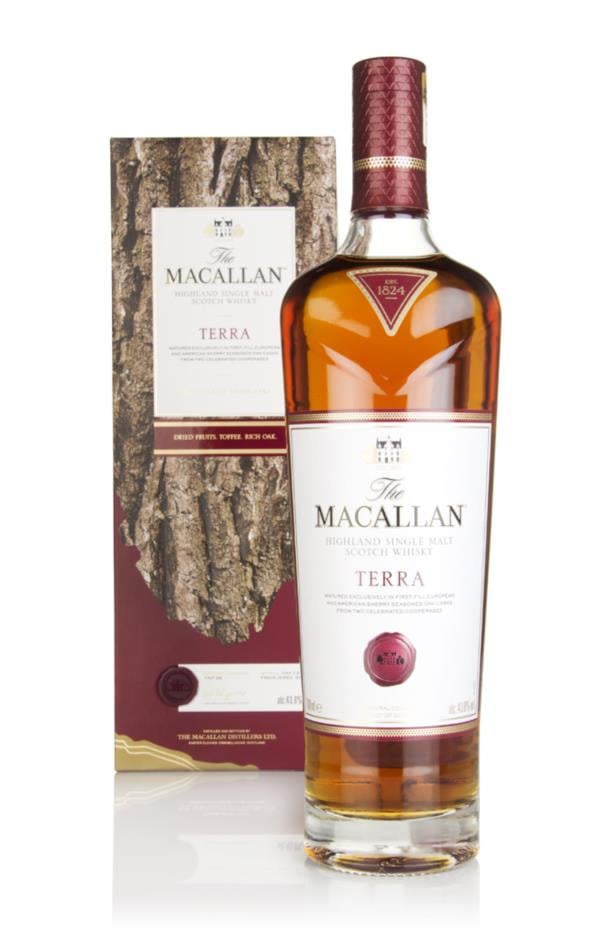
Estate is among the more self-effacing of the recent Macallan releases, and the more interesting for it. The distillery sits on the Easter Elchies estate above the Spey, a property acquired by Alexander Reid in 1824, and the point of this bottling is that a portion of the barley poured into the mash tun was grown on that same ground. It is a small, deliberate gesture toward provenance in an industry that often treats grain as an afterthought.
The whisky itself follows Macallan's familiar sherry-led grammar, though in a softened dialect. European and American oak casks are married in the blend, and the result in the glass is the colour of old gold rather than the mahogany of the deeper age statements. The nose opens with baked apple and orange peel, vanilla turning slowly beneath, and — to my palate at least — a dry cereal note that feels unmistakably of the field.
On the tongue Estate is measured. Raisin and clove arrive without fanfare, cinnamon drifts through the middle, and a polite sherry oakiness carries the finish. It is neither the biggest Macallan nor the most perfumed; it is the one that remembers where it came from.
At 43% it has body enough to sit patiently in the glass and open without water. For those tired of the auction-room theatre surrounding the brand, Estate is a reminder that Macallan remains, at root, a Speyside farm distillery with a long view of its own ground.