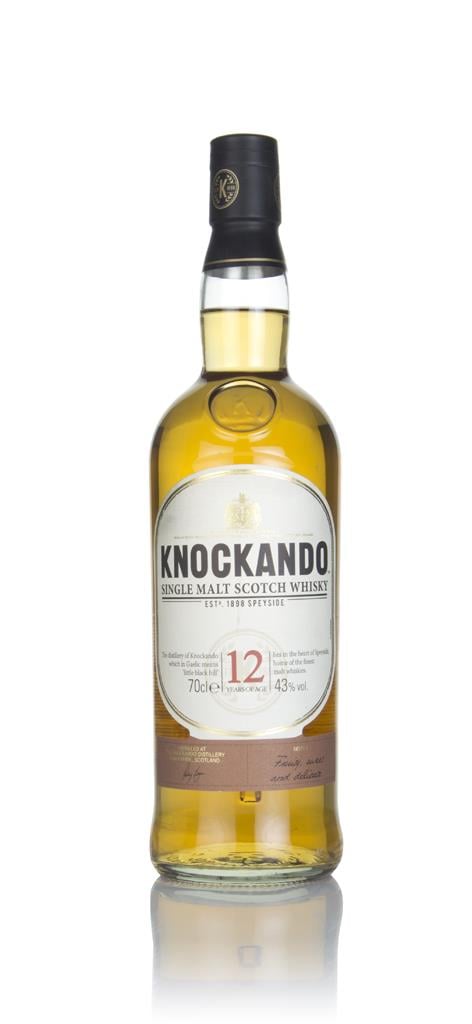
Knockando — pronounced with the stress on the second syllable, from the Gaelic Cnoc-an-Dhu, the little black hill — was built in 1898 by John Thomson of Elgin, in the late-Victorian boom that produced so many of Speyside's distilleries. It opened, badly timed, just as the Pattison crash of 1898 sent the industry into recession, and was sold within four years to W. & A. Gilbey, the London wine merchants, for a fraction of its build cost.
Gilbey's eventually became part of International Distillers and Vintners, and Knockando found its true vocation as the heart malt of J&B Rare, the pale, light blend that came to dominate the American and European markets in the post-war decades. The distillery still belongs, via Diageo, to the J&B family.
Knockando has long had the unusual habit of bottling by vintage and season rather than strictly by age — the labels traditionally carry both the year of distillation and the year of bottling, a practice introduced by Justerini & Brooks to emphasise that the whisky is released only when judged ready. The 18-year-old, sometimes labelled Slow Matured, shows the house style at its most generous: honeyed, gently sherried, soft and rounded, with the unhurried character of a malt that has been allowed to take its time.
It is a quiet, civilised whisky, and a fitting expression of one of Speyside's most discreet survivors.