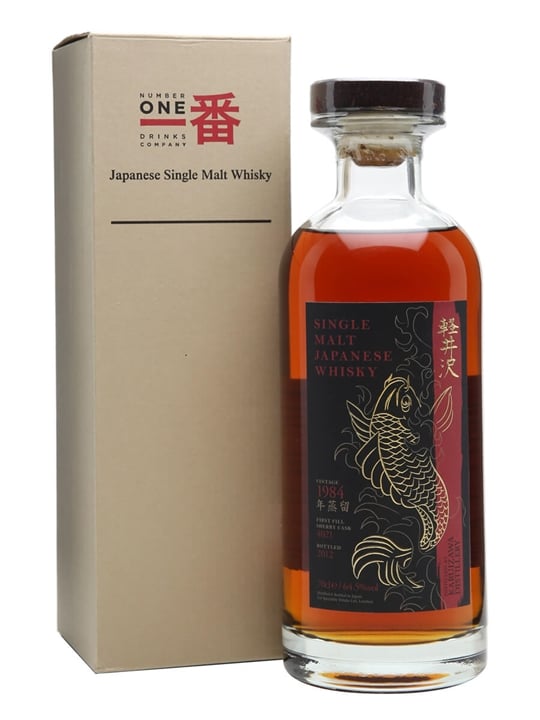

Karuizawa is the great lost cathedral of Japanese whisky. Founded in 1955 at the foot of Mount Asama by Daikoku-budoshu (later Mercian), the distillery used Golden Promise barley, tiny pot stills, and aged almost everything in ex-Sherry casks in damp warehouses on the volcano's slopes. It fell silent in 2000 and was dismantled in 2016. Every bottle now is finite, irreplaceable.
The 1984 vintage sits in the heart of the distillery's most celebrated era. Bottled at cask strength from a single Sherry butt, it carries that unmistakable Karuizawa signature — sherry maturation pushed to the edge of legibility, where the wood and the spirit have been arguing for thirty-something years and finally reached an uneasy truce.
I have only ever tasted Karuizawa in the company of others, never alone — it feels too significant, too final, to drink in solitude. Each sip is a small act of preservation. The texture alone is remarkable: an almost syrupy weight that coats the glass like aged Madeira.
What strikes me most is the savoury depth. There is none of the cloying raisin sweetness that ruins lesser sherried whiskies. Instead, walnut skins, blood, leather, and a strange mineral salinity that I have only ever encountered in old Karuizawa. It is a whisky that asks you to slow down, then slow down again.
A relic. A requiem. A reminder that some things, once lost, do not come back. Drinking it, I feel the weight of the warehouses on the slopes of Asama — the damp air, the silence after the stills went cold, the long patient work of the angels pulling the spirit down year by year. There is a mineral salinity here that I associate with proximity to old volcanic stone, and a gravity that no younger whisky, however skilled, has ever quite replicated in my experience.