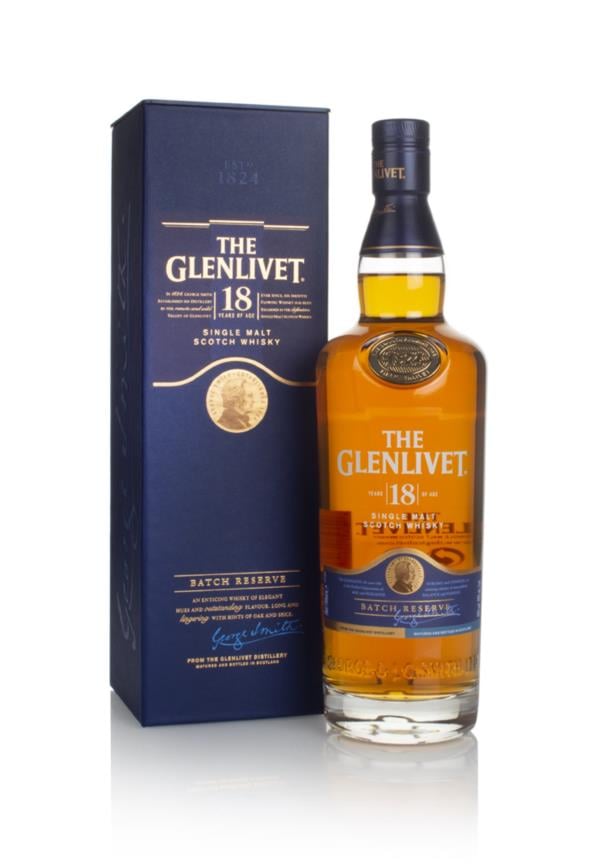

Few drams carry the historical weight of the 12 Year Old from The Glenlivet. George Smith, who took the first legal distilling licence in the Highlands under the 1823 Excise Act, set his stall in the Livet glen and established a style that would become the template for Speyside single malt. The 12 remains the house's point of entry and, for many, its point of departure too.
Matured in a combination of American oak and traditional European oak casks, the whisky carries the orchard-fruit signature that has defined The Glenlivet for generations. There is nothing showy here — no peat, no sherry bomb, no cask-strength theatrics. It is a whisky of measured composure, the sort of dram that rewards attention without demanding it.
On the nose, pear and green apple arrive first, followed by a dusting of vanilla and a faint floral note that recalls honeysuckle on a summer hedgerow. The palate is soft and well-mannered, with summer fruit, orange peel and a light toffee sweetness. The finish is medium in length, clean and citrus-tinged, leaving the faintest trace of toasted almond.
At 40% ABV it is gentle by modern standards, and those who prefer their Speysides louder may find it understated. Yet that restraint is precisely the point. The 12 is not trying to impress; it is trying to represent. The distillery sits in Glenlivet itself, a remote glen in the Cairngorms that George Smith chose for both its excellent water and, in the illicit years, its concealment from the excisemen. Smith's decision in 1824 to go legal made him a marked man in his own community, and for years he carried a pair of pistols given to him by the Laird of Aberlour for his protection. That pioneering history is still stitched into every bottle of the 12. As an introduction to the distillery — and indeed to Speyside itself — it remains one of the most reliable benchmarks in Scotch whisky. A dram of quiet authority, and of genuine historical consequence.