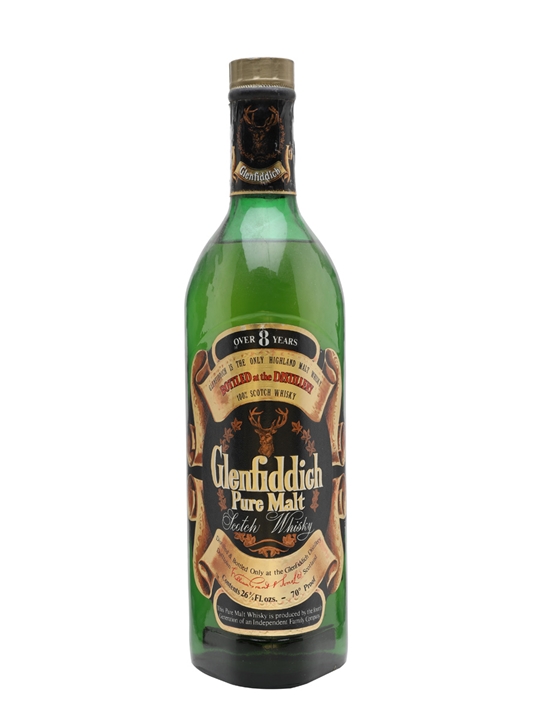

There are bottles you drink and bottles you sit with. The Glenfiddich 8 Year Old, bottled sometime in the 1970s, falls firmly into the latter category — though I'd encourage you to do both. This is a snapshot of Speyside single malt production from over half a century ago, and at £225, you're paying not just for whisky but for a window into how this spirit tasted before the modern era of craft marketing and finish experimentation took hold.
Glenfiddich in the 1970s was a distillery on the cusp of global recognition. The 8 Year Old was a core expression during that period — younger, leaner, and bottled at 40% ABV as was standard practice. What makes bottles like this compelling is their honesty. Eight years in oak, no chill-filtration theatrics, no exotic cask narrative. Just malt, water, wood, and time — then into the bottle it went.
What to Expect
Without specific tasting notes to hand, I can speak to what this style of whisky typically delivers. A 1970s Speyside single malt at eight years old and 40% will lean towards orchard fruit, gentle cereal sweetness, and a clean, malty backbone. The oak influence at this age tends to be restrained — you're tasting the spirit character rather than the cask. Expect something lighter in body than modern Glenfiddich expressions, with a directness that many contemporary bottlings have smoothed away. These older bottlings often carry a slightly waxy, almost honeyed quality that speaks to production methods of the era.
The Verdict
I'll be straightforward: £225 is a serious outlay for an 8 Year Old single malt by any modern measure. But this isn't a modern whisky. It's a piece of Speyside history in glass, and bottles from this era are becoming genuinely scarce. The value here is twofold — you get a perfectly drinkable dram that represents a style of whisky-making we simply don't see anymore, and you get the collector's satisfaction of owning something increasingly rare. At 8.2 out of 10, this scores well because it delivers exactly what it promises: an unadorned, confident Speyside malt from an era when simplicity wasn't a marketing choice but a philosophy. It won't change your life, but it will remind you why single malt became the global category it is today. For the whisky historian or the collector who actually opens their bottles, this is a worthy addition.
Best Served
Neat, and at room temperature. Give it ten minutes in the glass before your first sip — a whisky of this age deserves the courtesy of breathing. If you must add water, a few drops only. I'd avoid ice entirely; you'll flatten what makes this bottle worth opening in the first place. A tulip-shaped nosing glass will serve you best here. This is a dram for a quiet evening and unhurried company.