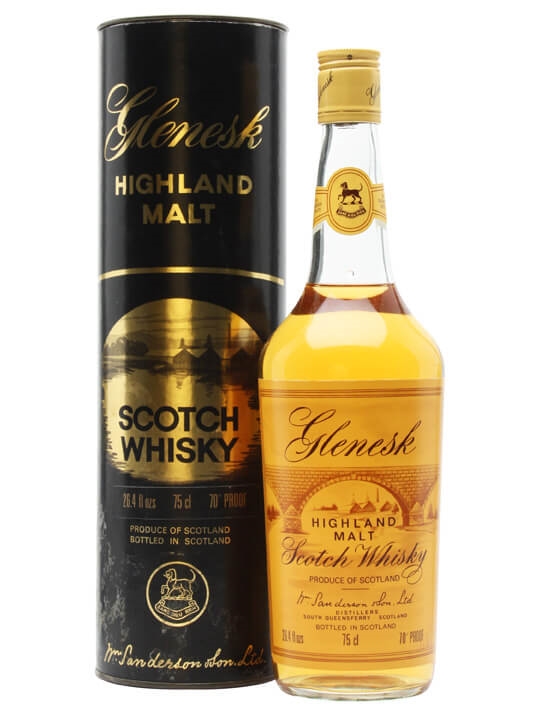

There are bottles you drink, and there are bottles that carry weight — the kind that make you pause before pulling the cork. The Glenesk / Bot.1970s Highland Single Malt falls squarely into the latter category. A 1970s bottling from a Highland distillery that has long since fallen silent, this is a whisky that represents a vanishing chapter of Scotch history. At £1,000, it demands serious consideration. Having spent time with this dram, I can tell you it earns that consideration honestly.
Glenesk is a name that carries a certain gravity among collectors and serious whisky enthusiasts. The distillery is no longer producing spirit, which means every remaining bottle is one fewer in the world. This particular expression, bottled in the 1970s at the standard 40% ABV, is a snapshot of Highland single malt whisky-making from an era when the industry operated under very different pressures and priorities than it does today. There is no age statement on the bottle, but frankly, the provenance and the period do the talking here.
Tasting Notes
I won't fabricate specific tasting descriptors where certainty is impossible — condition, storage, and the passage of decades all play their part with a bottle of this age. What I will say is this: a 1970s Highland single malt bottled at 40% ABV was crafted in a tradition that favoured approachability and balance. You should expect the hallmarks of that era and region — a spirit shaped by its Highland character, with the kind of rounded, unforced profile that distillers of that period were known for producing. Every bottle at this stage in its life is an individual, and yours will tell its own story.
The Verdict
I'm giving the Glenesk / Bot.1970s an 8.1 out of 10. That score reflects both what this whisky represents and the quality of what sits inside the glass. This is not a bottle you buy for casual drinking — it is a piece of Scotch whisky heritage from a distillery that will never produce another drop. The £1,000 price point is significant, but for a genuine 1970s bottling from a closed Highland distillery, it sits within a range I consider defensible. There are far less interesting bottles commanding similar prices on the secondary market. What you are purchasing here is rarity that is real, not manufactured — and a whisky that carries the fingerprint of a specific place and time in the Highland tradition.
Best Served
A whisky of this age and scarcity deserves respect. Serve it neat in a tulip-shaped nosing glass at room temperature. If you feel it needs opening up after a few minutes, add no more than a few drops of still water — just enough to let the spirit breathe. This is not a dram for ice, mixers, or anything that might mask what five decades of bottle ageing have shaped. Take your time with it. You will not get a second chance.