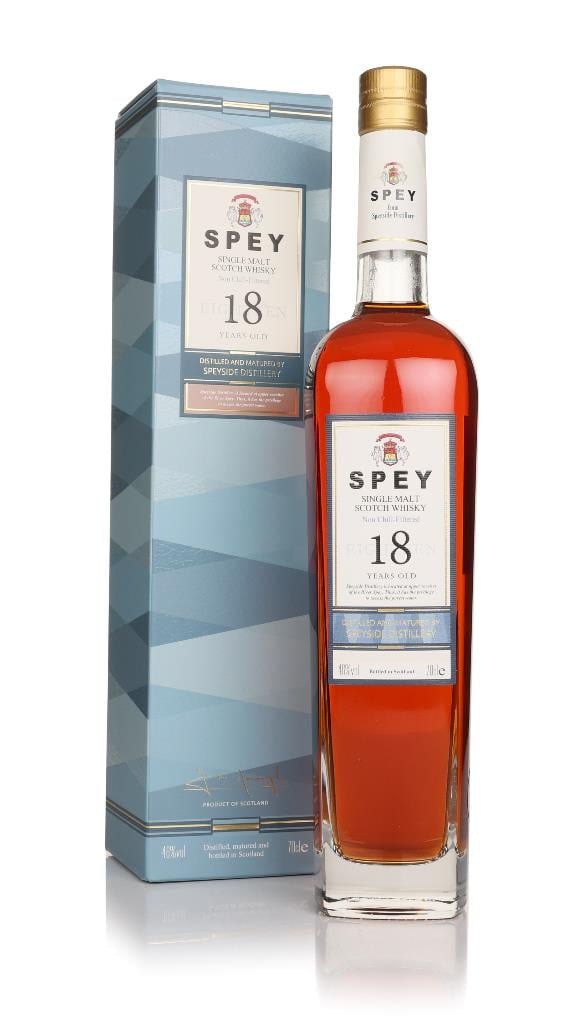

Glen Spey was built in 1878 by James Stuart, a Rothes grain merchant who also owned Macallan for a period. By 1887 it had been sold to W. & A. Gilbey — the same firm that would later acquire Strathmill — making Glen Spey the first malt distillery in Scotland to come under English ownership. Through subsequent corporate evolutions it landed with Diageo, where its spirit became another key component of the J&B blend.
Rothes is a small town with disproportionate distilling weight: Glen Spey shares it with Glenrothes, Glen Grant and Speyburn, and like its neighbours it owes much of its character to the soft water of the local burns and to stills fitted with purifiers, which return heavier vapours for redistillation and produce a notably light, clean spirit. Single malt bottlings of Glen Spey are scarce, and this 25 Year Old, released within Diageo's annual Special Releases programme, is among the most considered.
The nose opens with pear drops and dried grass, moving into vanilla custard and a thread of cooling mint. The palate follows the script: light and clean, shortbread and lemon supported by a fine pepper edge. There is no struggle between spirit and wood — the cask has lent oak structure without imposing tannin, and the malt's essential delicacy survives intact.
The finish is medium-length, gently oaked, with lingering orchard fruit. As with several of its J&B stablemates, Glen Spey rewards quiet attention rather than first-sip impact. Twenty-five years of patient maturation has produced a Speyside of considerable elegance, and a useful exhibit for those who suspect Diageo's blending malts of being merely industrial.