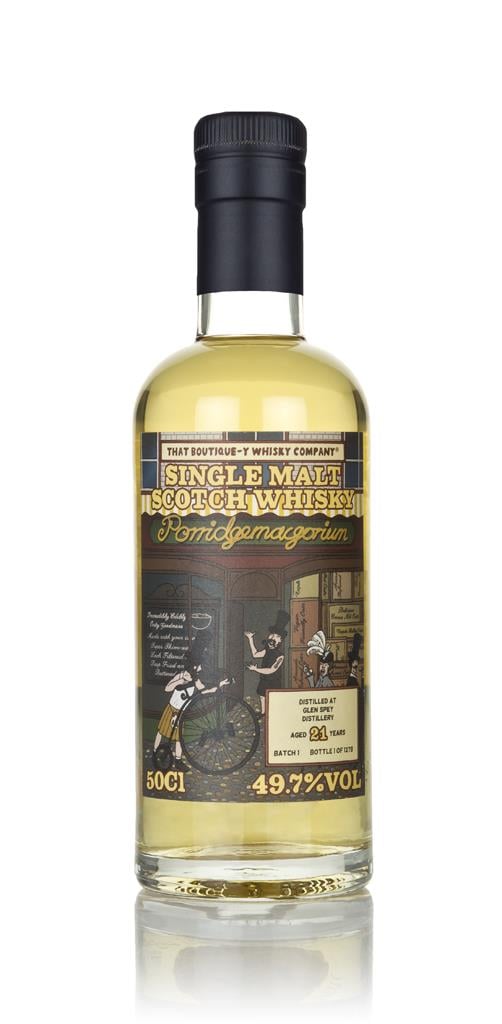

Glen Spey was founded in 1878 by James Stuart, a corn merchant who had taken over the Macallan a few years earlier. Built in the small Speyside town of Rothes, the distillery passed in 1887 to the London gin house of W and A Gilbey, the first English company to acquire a Highland malt distillery. Through Gilbey, and later International Distillers and Vintners, Glen Spey became a key fillings malt for the J&B blend, and it has remained in that role under successive owners up to and including Diageo.
Single malt bottlings of Glen Spey are uncommon. Like Glenlossie, the distillery uses purifiers on its spirit stills, encouraging a lighter, grassier spirit, and the house character has always favoured restraint over richness. A twenty-one year old at cask strength, when one appears, is therefore a useful chance to hear the distillery without the chorus of a blend behind it.
The nose is gentle but well defined, with pear, vanilla and cut hay above a soft nutty note. The palate at full strength is bright and grassy, the green apple and almond well integrated with malted barley, the oak content judged so as not to obscure the cereal core. Water lengthens it but is hardly necessary.
The finish is medium-long, dry and nutty, leaving a faint orchard fruit echo. This is a Speyside for those who prefer their whiskies articulate rather than ornate.