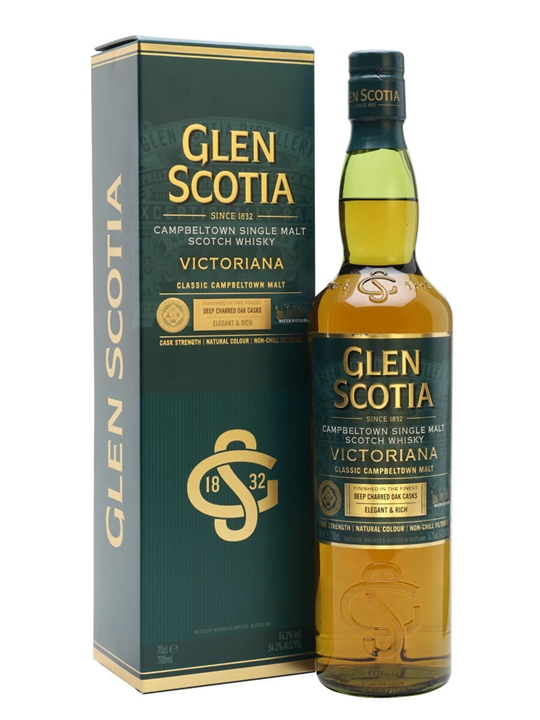

The Campbeltown Malts Festival takes place every May, when Glen Scotia, Springbank and Glengyle throw open their doors for a week of tastings and warehouse tours. Each distillery releases a single bottling tied to the festival, and Glen Scotia's contribution has become one of the more eagerly chased annual releases on the west coast.
The festival edition changes every year — different cask combinations, sometimes peated, sometimes not — but it is invariably bottled at cask strength, non-chill-filtered and at natural colour. It is, in other words, exactly the kind of release that rewards Campbeltown loyalists who turn up at the distillery gates with empty bags and full wallets.
Glen Scotia itself is the smaller and quieter of Campbeltown's working distilleries, founded in 1832 and surviving — sometimes barely — through the long collapse of the town's whisky industry in the early twentieth century. Its house style leans on coastal salinity and a soft fruit core, and the festival bottlings tend to amplify both at the higher strength.
This particular release wears its provenance plainly. There is brine in the glass before the spirit even touches the lip, and the palate carries the slightly oily, slightly tarry weight that anyone who has wandered along Campbeltown harbour will recognise immediately. Dilution opens it considerably; a few drops of water bring out softer vanilla and dried orchard fruit beneath the salt.
It is not a subtle dram, and it is not meant to be. It is a souvenir of a particular week in a particular town, and on those terms it succeeds.