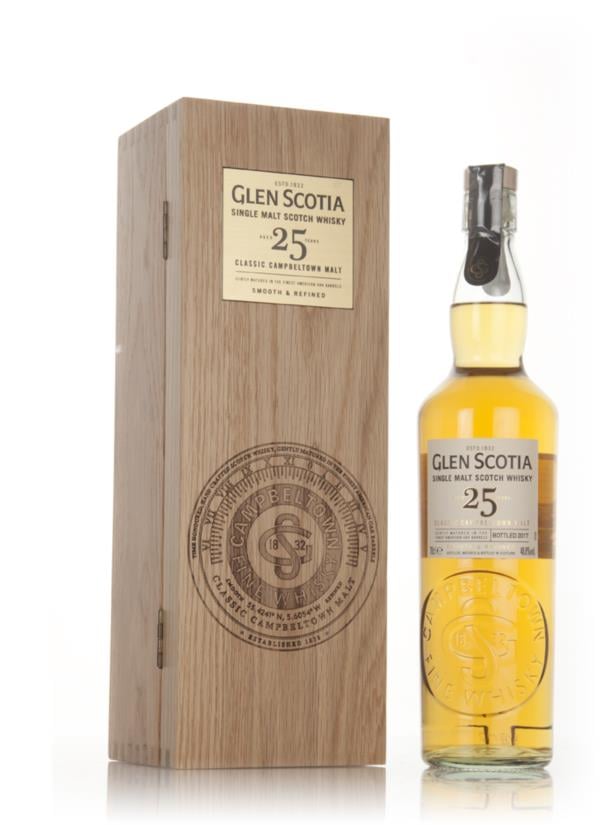

Twenty-five year old Campbeltown whisky is, in the context of the region's twentieth-century history, a small miracle. Glen Scotia was mothballed more than once between the 1920s and the 1990s, and stock from the middle decades of that period is scarce. The distillery's 25 Year Old is drawn from a mixture of first-fill bourbon and refill casks and bottled at a natural strength of 48.8%.
What the age brings is a shift from fruit-led brightness into something more architectural. The spirit turns waxy, almost beeswax-like, and the maritime note that sits politely in the younger bottlings becomes a structural element rather than a garnish. There is old oak, tobacco leaf and a dry mineral salinity that runs the whole length of the glass. The 48.8% is pitched precisely — high enough to carry the density of the spirit, low enough to let the detail through.
For context, the only other Campbeltown distilleries currently operating are Springbank and Glengyle (Kilkerran), so aged stock from this corner of Scotland is genuinely rare. A 25 from Glen Scotia is not an everyday purchase and was never meant to be. At around £400 it competes with older Highland and Islay bottlings, and holds its ground on character rather than weight.
A serious whisky in the old sense: a liquid record of a place, a period and a distillery that, against long odds, kept its stills running. Worth the glass if you have the money, and worth the patience if you do not.