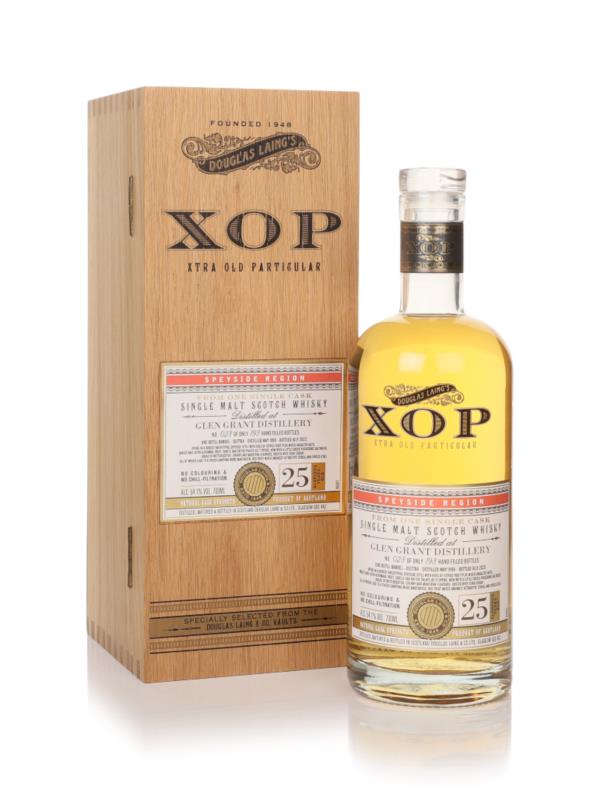

Twenty-five years is a long time to trust a Speyside spirit to hold its nerve, and Glen Grant's delicate distillate faces the challenge with unusual grace. The purifiers fitted by James Grant in 1872 produce a light, clean new-make — notably fruity, low in heavier congeners — and while lesser spirits might have been swallowed whole by a quarter-century in oak, Rothes' fruit-forward character endures with remarkable stubbornness.
The distillery itself was founded in 1840 by brothers James and John Grant, and within a generation it had become one of the first distilleries in the Highlands to install electric light. It was also among the earliest Scotch distilleries to bottle its own single malt as a branded expression, decades before single malt became a category in its own right. That sense of quiet pioneering runs through everything the house releases.
The nose of the 25 Year Old opens on beeswax and dried apricot, honeysuckle drifting through, with only a trace of polished oak to remind you of the years spent in the warehouse. On the palate it is silky and refined — candied orange and soft vanilla first, then baked apple and a thread of hazelnut. The 43% bottling feels exactly right for a whisky of this age; stronger would have disturbed the balance, weaker would have lost the definition.
The finish is long and gently spiced, with honey and a whisper of tropical fruit that speaks to the patience of master distiller Dennis Malcolm, who has overseen Glen Grant's stocks for more than six decades and knows these warehouses better than any man living.
This is not a whisky that shouts. It rewards the drinker who sits with it, and in that quiet conversation reveals itself as one of Speyside's most articulate elder statesmen.