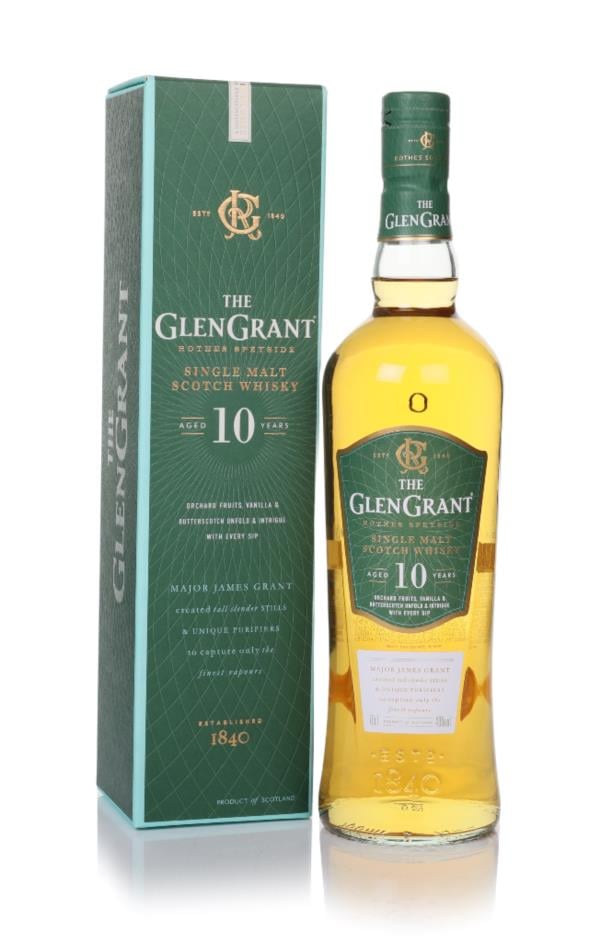

Glen Grant has, since James and John Grant founded the distillery in Rothes in 1840, traded on lightness and clarity rather than weight. The seventeen-year-old expression sits between the better-known 10 and 18 in the core range and shows what an extra few years in refill bourbon casks does to a spirit already defined by its tall stills and purifiers.
Those purifiers, fitted in the 1860s under the stewardship of Major James Grant — the Major whose tiger skins and exotic travels still shape the distillery's folklore — strip heavier compounds from the vapour and return them to the pot. The result is a notably delicate new make, and at seventeen years it has put on a pale gold coat without losing its estate-orchard character.
On the nose there is ripe pear and vanilla pod, the familiar malted-barley sweetness of the house and a whisper of blossom. The palate is poised rather than plush: poached apple, honeyed cereal, toasted almond and a lift of citrus peel. Water is unnecessary at 43%. The finish is medium and clean, drying gently with a grassy note that recalls the walled Victorian garden Major Grant laid out beside the distillery.
It is not a whisky that shouts. Those who want smoke, sherry or oak tannin should look elsewhere. For drinkers who value restraint and a clear line from barley to glass, the 17 is an honest reading of what Glen Grant does, carried a little further than the entry-level bottling permits.