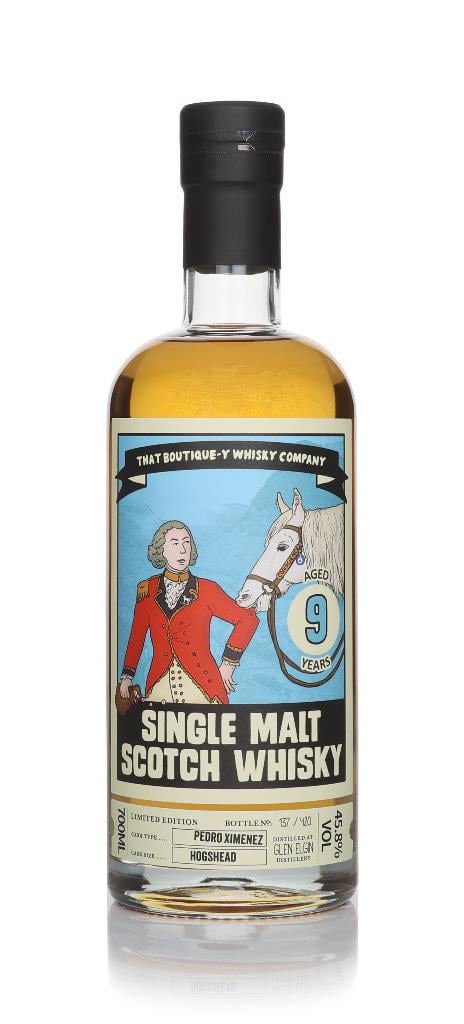
Glen Elgin was built in 1898 at Longmorn near Elgin by William Simpson and James Carle, designed by Charles Doig in what would prove to be the last distillery he completed before the Pattison crash brought a halt to Speyside expansion. For most of its life it has worked as a quiet contributor to the White Horse blend, and its single malt bottlings have been few and far between.
This 18 year old came as part of Diageo's Special Releases, bottled at 54.8% and without chill filtration. The standard Glen Elgin is the 12 year old at 43%; older expressions have appeared only sporadically, and almost always through this programme.
The nose is classic Glen Elgin — honey, dried apricot, orange marmalade, beeswax — with a touch of toffee suggesting the influence of refill sherry wood. The palate is rich and unhurried: heather honey, raisin, baked apple, almond and a warm spice that builds gently. Water softens it without diluting the core. The finish is long, honeyed and softly spiced, drying through oak at the very end.
It is the kind of whisky that explains why the blenders prized Glen Elgin so highly. There is nothing flashy here, no peat or unusual finish, simply a beautifully made Speyside malt presented at strength and given the age it warrants. Among Special Releases it has tended to be one of the better-value bottlings, and on quality it stands with much more famous names. Glen Elgin's role as a top-dressing malt for White Horse has kept its reputation alive among blenders even as the wider drinking public has tended to overlook it.