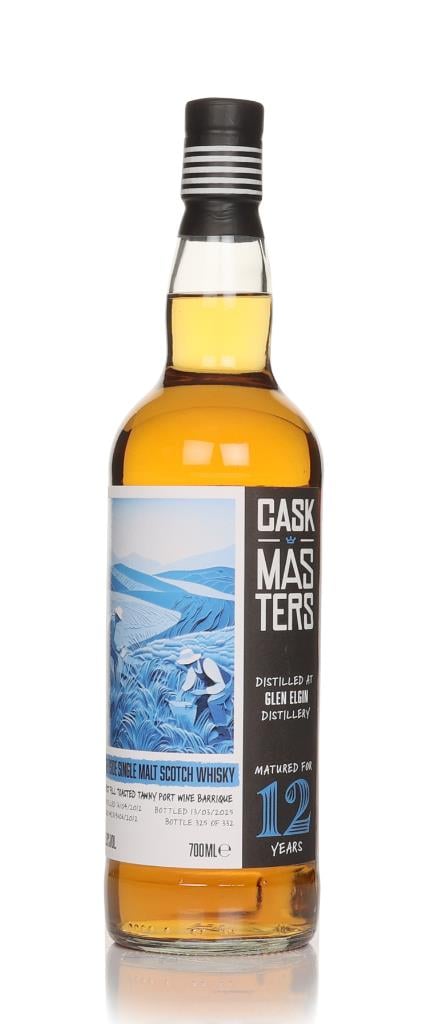
Glen Elgin was the last distillery built in Speyside in the nineteenth century, completed in 1900 by the architect Charles Doig for a partnership that included William Simpson, the former manager of Glenfarclas. Its timing was poor. The Pattison crash of 1898 had drained the whisky industry of capital, and Glen Elgin worked only fitfully in its early years before being taken on by the Distillers Company Limited in 1936.
It has belonged to the DCL and its successors ever since, and for most of the twentieth century its entire output was quietly directed into the White Horse blend, where Glen Elgin has long been considered one of the signature malts. Bottlings under its own name were rare until Diageo made the 12-year-old an official expression within the Classic Malts extended family, at which point it finally stepped out from the shadow of the blend.
The 12-year-old is bottled at 43% ABV and leans on the distillery's characteristic honeyed, fruity style. Glen Elgin runs its worm tub condensers hard and favours slow fermentation, which gives a heavier, fruit-laden spirit than many of its Speyside neighbours. The wood policy here is refill and ex-bourbon in the main, and the house sweetness carries through cleanly.
It is not a dram that shouts. Those looking for sherry bombast or peated drama will find little to detain them. What Glen Elgin 12 offers instead is the quiet virtue of a well-made Speysider left to its own devices — honey, orchard fruit and a gentle cereal warmth, assembled with the unfussy competence of a distillery that has spent a hundred and twenty years quietly doing its job. As an introduction to the softer end of Speyside, it is hard to fault.