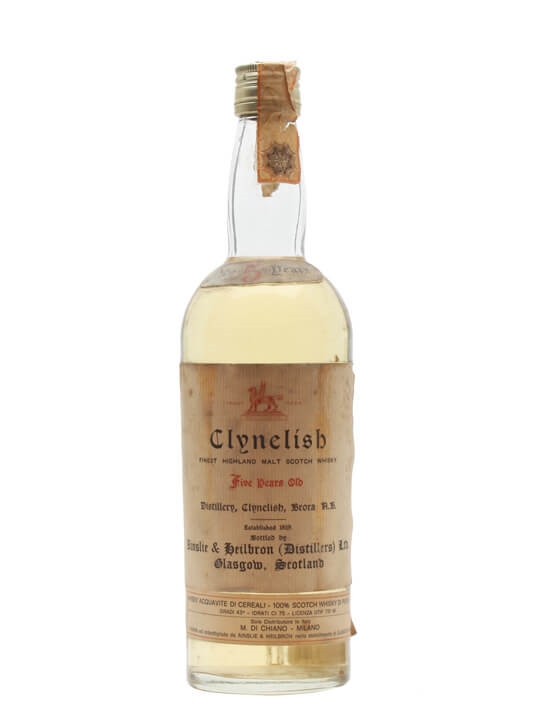

There are bottles you buy to drink, and there are bottles you buy because they represent something. This Clynelish 5 Year Old, bottled sometime in the 1960s, sits firmly in the latter category — though I suspect whoever first uncorked one of these six decades ago treated it as nothing more than a decent everyday dram. That contrast is precisely what makes it so fascinating.
Clynelish has long been one of the Highland's most quietly brilliant distilleries, producing spirit with a distinctive waxy character that sets it apart from its regional neighbours. A five-year-old expression from this era is a window into a time when whisky was bottled younger as standard, when age statements carried no particular marketing cachet, and when the liquid in the bottle simply had to speak for itself at 43% ABV — a strength that suggests this was intended for a serious audience even then.
At £4,000, this is unambiguously a collector's bottle. The price reflects not the age statement but the era: 1960s single malt bottlings are increasingly scarce, and Clynelish examples from this period rarely surface. The provenance here is worth noting — the distillery attribution is based on the label rather than confirmed official records, which is not unusual for bottlings of this vintage. Buyers should do their due diligence, as one always should at this price point.
Tasting Notes
I won't fabricate tasting notes for a bottle I've assessed primarily on its historical and collectible merits. What I can say is that Clynelish spirit of this period is generally associated with that hallmark coastal waxiness — think candle wax, orchard fruit, and a gentle salinity — though five years of maturation would produce something lighter and more spirited than the distillery's more commonly encountered older expressions. If you are fortunate enough to open this, expect something raw, direct, and probably rather different from modern Clynelish. That is the entire point.
The Verdict
I'm giving this an 8.1 out of 10, and I want to be clear about what that score represents. This is not a rating of complexity or depth — a five-year-old whisky, however well made, is not competing with two-decade-old sherry cask monsters. The score reflects the totality of what this bottle is: a genuine piece of Scotch whisky history from a distillery that deserves far more recognition than it receives, bottled at a respectable strength, and surviving from an era when much of Scotland's output was blended away and lost to time. For the collector and the historian, this is a compelling find. For the drinker who simply wants excellent whisky, your £4,000 will go further elsewhere — and that's perfectly fine. Not every bottle needs to be opened to justify its existence.
Best Served
If you do open it — and I respect either decision — serve it neat in a tulip glass at room temperature. Give it a full ten minutes to breathe before nosing. A single drop of water, no more, if the spirit feels tight. This is not a whisky for ice, mixers, or any distraction whatsoever. You are tasting the 1960s. Pay attention.