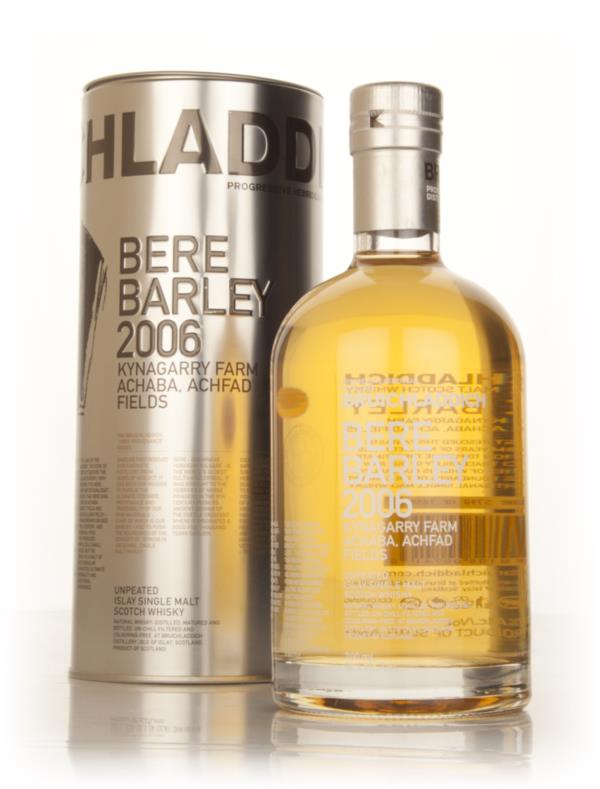

Bere is one of the oldest cultivated grains in the British Isles, a six-row landrace barley that predates modern two-row varieties by centuries. It was once the staple cereal of the Northern and Western Isles, sown in the short, bright summers of Orkney and Shetland and harvested for bread, ale and, when it could be spared, whisky. Industrial agriculture drove it to the margins through the twentieth century, and by the 1990s only a handful of crofters still grew it.
Small quantities are still grown today on Orkney by farmers working with the Agronomy Institute at Orkney College, which has led much of the academic work on heritage cereals in Scotland. Bruichladdich's Bere Barley project sources this grain from those growers and distils it as a single malt, exploring whether the ancestor of Scotland's modern malting barleys produces a distinctive spirit.
The distillery has long argued that terroir, variety and provenance matter to whisky in the same way they matter to wine, and the Bere Barley releases are the clearest test of that thesis. Yields from bere are notoriously low — the plant evolved for the long days and short seasons of the far north, not for industrial efficiency — and each bottling represents a small, traceable harvest.
The whisky is unpeated, matured in American oak, and bottled at 50% ABV without chill-filtration or colouring. What it offers is not a radically different drink so much as a slightly different texture and weight: a drier, more cereal-led malt with an old-fashioned grainy character that does feel of another age. Whether one accepts the terroir argument or not, it is a quietly fascinating piece of agricultural archaeology in liquid form, and worth seeking out for that reason alone.