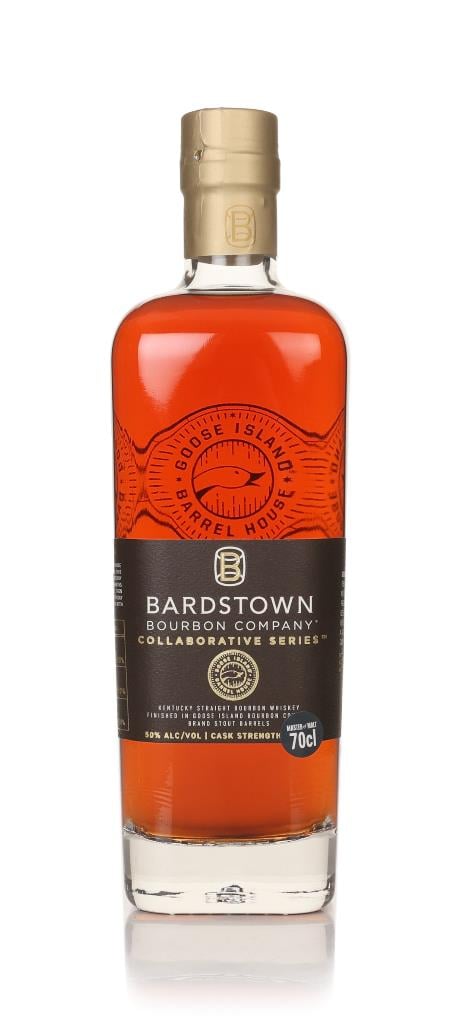

There is a beautiful recursion to this bottle. Bourbon is aged, the empty casks go to Chicago where Goose Island fills them with imperial stout, and then — once the beer has taken what it wants — the barrels come home to Bardstown to finish another bourbon. It's a palimpsest of a whiskey, each layer writing over the last without quite erasing it.
The nose arrives like a cold brew bar in winter: ground coffee, dark cocoa, molasses, a thread of roasted malt curling beneath the vanilla and oak. You can smell the beer's ghost clearly, but it doesn't shout — it murmurs alongside the grain.
On the palate the density is extraordinary. Espresso and burnt sugar open the door, then bittersweet chocolate, brown butter, and a surprising flash of dark cherry tucked into the middle. The bourbon's corn sweetness gives ballast so the stout notes don't tip into gimmick; instead they feel like a natural extension, as if the spirit had always wanted to lean this dark.
The finish is where I linger longest. Roasted barley and cocoa nib hang on the back palate, oak char drying the tongue, a faint vanilla sweetness closing it out like a spoonful of ice cream at the bottom of the glass. This is a dessert whiskey in the best sense — one built for late evenings, for the hour when the fire is low and no one wants to move. A bottle that rewards both bourbon drinkers and craft beer nerds, and proves how far a well-chosen cask can carry a story.