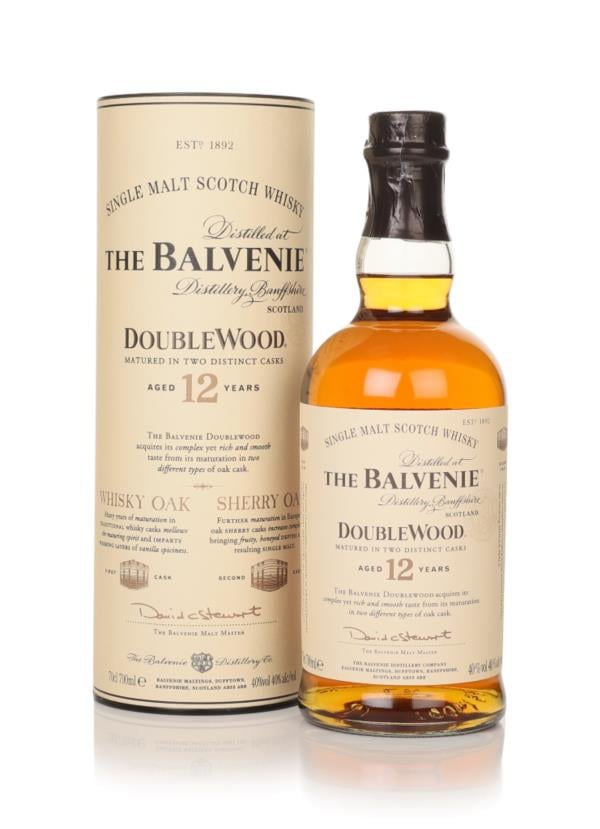

The DoubleWood concept is one of malt master David Stewart's signature contributions to the industry. Stewart, who joined William Grant in 1962 and whose tenure at Balvenie has become the stuff of trade legend, pioneered the practice of cask finishing in the early 1980s — taking whisky matured in one type of wood and transferring it to another for a second, shorter period. The DoubleWood 12 that emerged from this technique became a core Balvenie expression and a template for an entire category of finished whiskies across Scotland.
DoubleWood 17 is the older expression of the same idea: seventeen years in traditional American oak, then a finishing period in first-fill European oak sherry casks before bottling at 43% abv. Five extra years in wood is not a trivial addition, and the difference between the 12 and the 17 is not just more of the same — it is a genuinely different whisky, denser and more contemplative.
On the nose the sherry influence reads more oloroso than the 12's lighter fruit: dried fig, honeyed barley, vanilla and a warm sweet-oak note. The palate confirms it — raisin and toffee apple, hazelnut, cinnamon, and a more substantial body than the younger sibling. The finish is long and gently drying, with the European oak asserting itself without overwhelming the Balvenie house character.
At its price point it sits in a crowded part of the Speyside shelf, competing with 18 year olds from every major distillery. What it offers is the coherence of Stewart's technique applied to older stock, and for drinkers who love the DoubleWood 12 the 17 is a logical and rewarding step up.