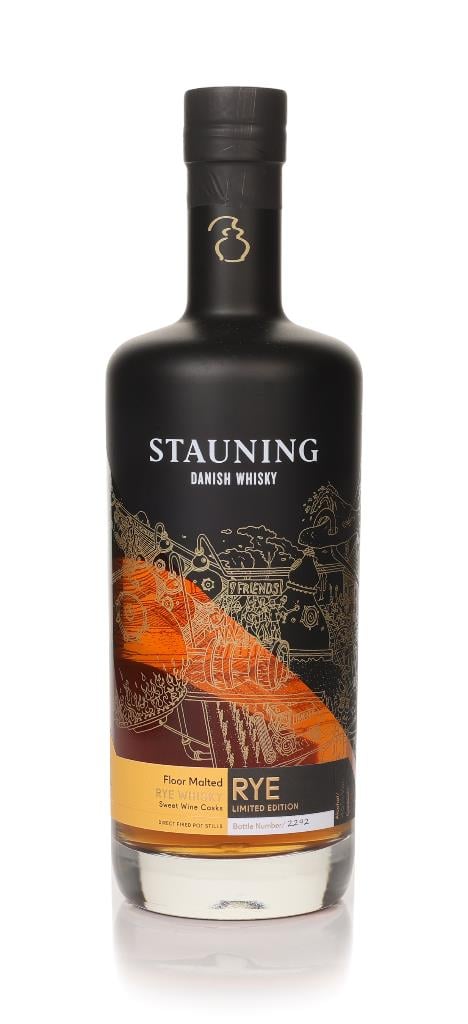

Stauning is a genuine underdog story. Founded in 2005 by nine friends with no distilling background — a chef, a butcher, a pilot, a doctor and five others — who met in a pub in the west Jutland village of Stauning and decided to try making whisky in Denmark. Their first still was built inside an old slaughterhouse, and for years they operated on the kind of enthusiastic amateurism that either collapses or changes a category. In Stauning's case it changed a category.
The distillery became famous early for doing things the hard way. They floor-malt their own barley and rye by hand — one of the very few whisky distilleries in the world still doing so — and they distil in small, direct-fired copper pot stills, a method largely abandoned elsewhere for efficiency reasons. The rye, grown locally in west Jutland, is the heart of their identity: Denmark has a long culinary tradition with rye bread, and Stauning's Rye whisky is in many ways a distillation of that tradition.
In 2015 Diageo invested in the distillery, allowing Stauning to build a much larger facility while keeping the floor maltings and direct-fired stills at the centre of production. The spirit is matured in a combination of new American oak and ex-bourbon casks, and bottled at 48% ABV.
What you taste is genuinely distinctive. It is spicier than American rye, breadier than Canadian rye, and carries a Nordic freshness that belongs to no other category. It is the bottle I reach for when someone asks what Danish whisky actually means.
An original — in the truest sense of the word.