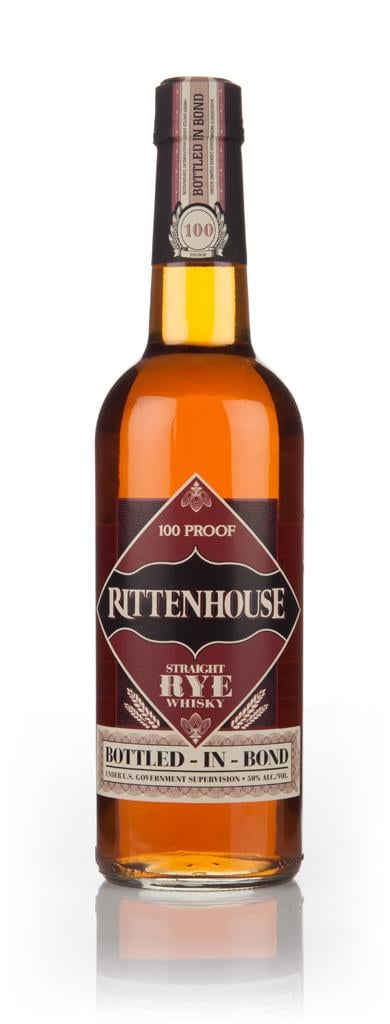

If the American cocktail revival had a patron saint, it would pour out of a Rittenhouse bottle. When bartenders went searching in the early 2000s for a rye that could stand up in a Manhattan without bankrupting the bar, this was the one they reached for. Bottled-in-bond, 100 proof, four years old, distilled at Heaven Hill — and priced like an apology. It became the spine of a movement.
The nose is honest and inviting. Rye bread fresh from the oven, vanilla pod, a brightness of orange peel, then the herbal whisper of dill and mint that good rye seems to carry like a secret handshake. There is nothing showy about it. It smells like work being done well.
On the palate it is generous for the money. Caramel and baking spice arrive together, then the rye character asserts itself — black pepper, dry toasted oak, a flicker of stone fruit underneath. The 100 proof gives it shoulders. You can feel the heat but it never bullies the palate, never demands more than it earns.
The finish is medium-long, peppery and clean, leaving behind a faint bitter-sweet oak that asks you, politely, for another sip. In a Manhattan it is glorious — the rye spine cuts through sweet vermouth without disappearing. Neat or over a single rock it is equally happy.
Rittenhouse is not the rye you bring out to impress. It is the rye you keep within arm's reach because it never lets you down. Some bottles earn their place on the shelf. This one earns its place on the bar.