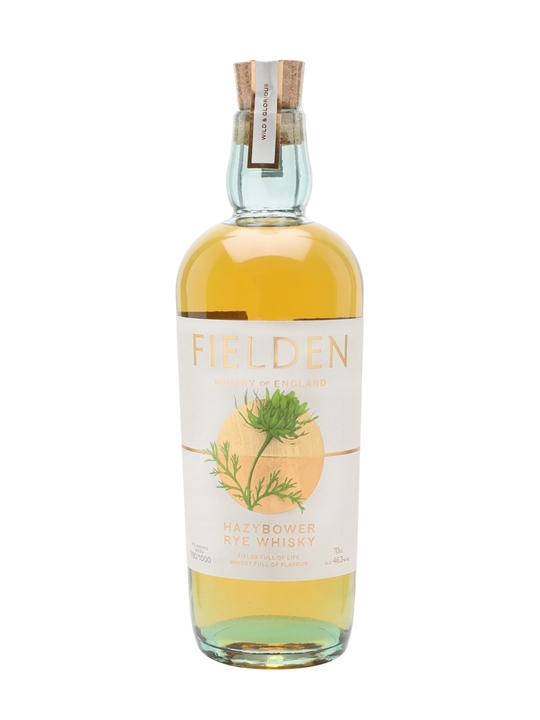

English rye whisky is still a genuine rarity, and that alone makes the Fielden Field Notes Series #2 — the Hazybower Release — worth paying attention to. Fielden are part of a small but growing wave of English distillers actually working with rye grain, and this second instalment in their Field Notes series bottled at 46.3% ABV signals a producer that's serious about letting the spirit speak. No chill filtration at that strength, no hiding behind heavy cask influence. This is a distillery putting their rye credentials on the table.
What draws me to this bottle is the concept behind it. The Field Notes series appears designed as a snapshot — a record of where the distillery is right now in its development. That's an honest approach, and one I respect. Too many young operations try to dress up their spirit as something it isn't. Fielden seem comfortable saying: here's what we're making, here's what our rye tastes like at this stage. The Hazybower Release name suggests a specific agricultural or site connection, tying the whisky back to the land where the grain was grown. For someone like me who spent years explaining to bar guests why provenance matters, that kind of detail is meaningful.
At 46.3%, this sits in a sweet spot — enough strength to carry the natural spice you'd expect from a rye-forward mashbill without turning into a fire-breather. English rye won't taste like Kentucky rye, and that's the point. The terroir is different, the climate is different, the growing conditions produce a different character in the grain itself. If you're coming to this expecting a Rittenhouse or a Bulleit, recalibrate. Think of it more like discovering what rye grain does when it grows in English soil and gets distilled by people who care about the raw material as much as the barrel.
Tasting Notes
I'll be honest — I want to let you come to this one fresh rather than load you up with my specific descriptors. What I will say is that at this ABV and with rye as the star grain, expect that characteristic peppery backbone, some cereal sweetness, and whatever the cask has contributed in terms of warmth and depth. The 46.3% bottling strength means you're getting a fuller delivery than the standard 40% you see from many producers. Add a few drops of water and see what opens up — rye often rewards a little patience.
The Verdict
At £89.95, you're paying a premium over mass-produced American ryes, but you're buying something fundamentally different. This is a craft English rye from a small operation, bottled at a considered strength, and released as part of a series that's documenting a distillery finding its voice. Is it worth it? I think so. You're supporting genuine innovation in English whisky, and you're getting a bottle that will genuinely surprise anyone you pour it for. A 7.6 out of 10 feels right — this is a confident, well-presented whisky that earns its price through character and ambition. It's not trying to compete with bourbon-barrel ryes from Kentucky. It's doing its own thing, and doing it well.
Best Served
Pour it neat first — always — and give it five minutes in the glass before you nose it. Once you know the spirit, try it in a Manhattan. Rye is the original base for that cocktail, and an English rye brings a different personality to the drink. Use a quality sweet vermouth like Cocchi di Torino, two dashes of Angostura, and stir it properly — thirty seconds minimum. The rye spice should cut through the vermouth beautifully. If you're feeling adventurous, a simple Old Fashioned with a single sugar cube and orange peel will let the grain character shine without anything getting in the way.