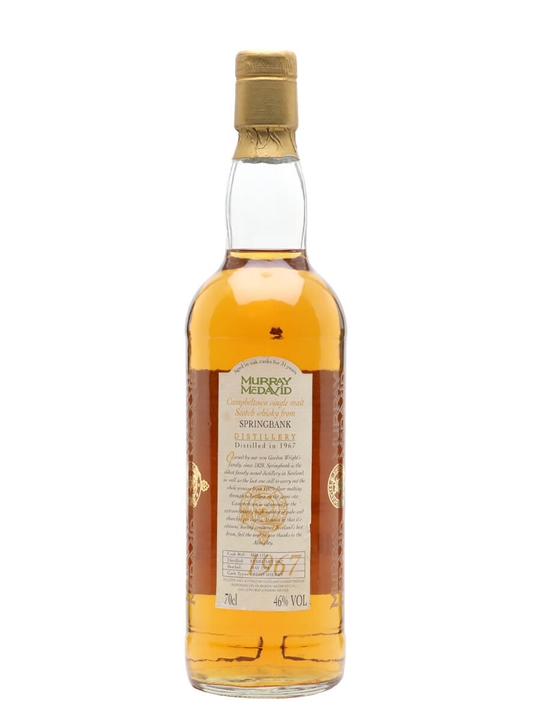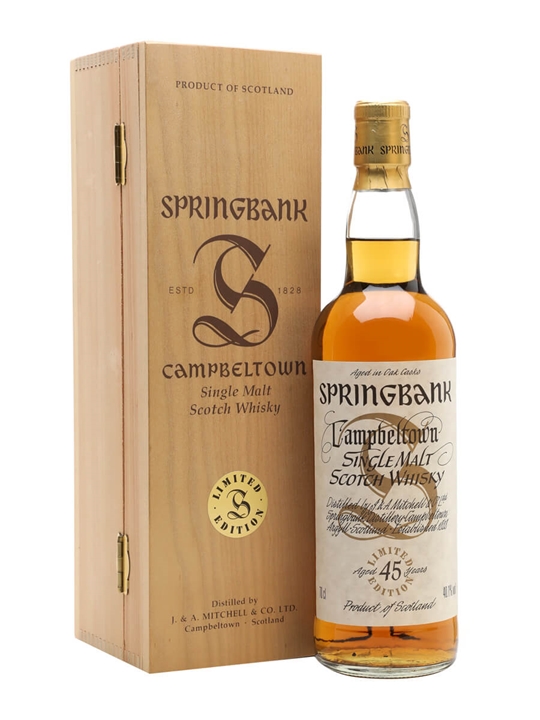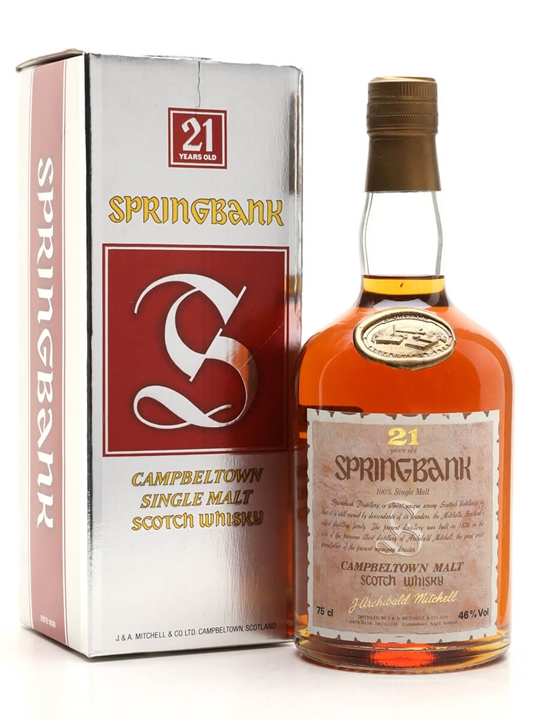

There are three surviving distilleries in Campbeltown. There used to be more than thirty. That fact alone should tell you something about what it means to hold a bottle from this particular corner of Scotland — a place where the whisky industry didn't just decline, it nearly vanished altogether. This Springbank 21 Year Old, presented in the squat, broad-shouldered dumpy bottle that collectors know on sight, was filled sometime in the early 1960s and bottled during the 1980s, when Campbeltown's reputation was still climbing back from the wreckage of the twentieth century. It is, in every meaningful sense, a time capsule.
At 46% ABV, this was bottled at a strength that suggests confidence. No chill-filtration theatrics, no reduction to a timid 40%. Springbank has always done things its own way — one of the few Scottish distilleries to handle every stage of production in-house, from malting to bottling — and even decades ago, the approach was unapologetically hands-on. A 21-year-old expression from this era would have spent its entire life in a dunnage warehouse mere yards from the sea, breathing in the salt air of Campbeltown Loch through the pores of the cask.
What should you expect? Campbeltown malts of this vintage sit in a category almost entirely their own. They carry a coastal character that's distinct from Islay's peat-forward punch — think brine and engine oil rather than bonfire smoke. There's a waxy, almost oily texture that Springbank is known for, and at 21 years, you'd anticipate considerable depth from extended cask maturation. The dumpy bottle format itself is a marker of the era: these were produced before the taller, slimmer bottles became standard, and they've become objects of desire among collectors who understand that the liquid inside often represents a style of whisky-making that no longer exists in quite the same form.
The Verdict
At £2,750, this is not a casual purchase. But it's worth understanding what you're paying for. You're not just buying whisky — you're buying provenance. A 1980s bottling of a 21-year-old Springbank means spirit distilled when Campbeltown was still fighting for relevance, aged through decades of quiet persistence, and released before the global whisky boom turned bottles like this into auction-house commodities. The fact that it was bottled at 46% rather than being watered down to maximise yield speaks to an integrity that justifies the price. I've tasted enough old Campbeltown to know that when these bottles are stored well, they deliver something that modern releases — however excellent — simply cannot replicate. The whisky world has moved on, but this bottle hasn't, and that's precisely the point. An 8.4 out of 10 feels right: this is a remarkable piece of whisky history that earns its place on merit, not just nostalgia.
Best Served
Neat, in a tulip glass, after dinner. Give it twenty minutes to breathe once poured. If you're inclined, a few drops of water may open things up, but at 46% it shouldn't need much coaxing. This is a whisky for a quiet room and unhurried company — the kind of dram you sit with while rain taps against the window and nobody checks the time.