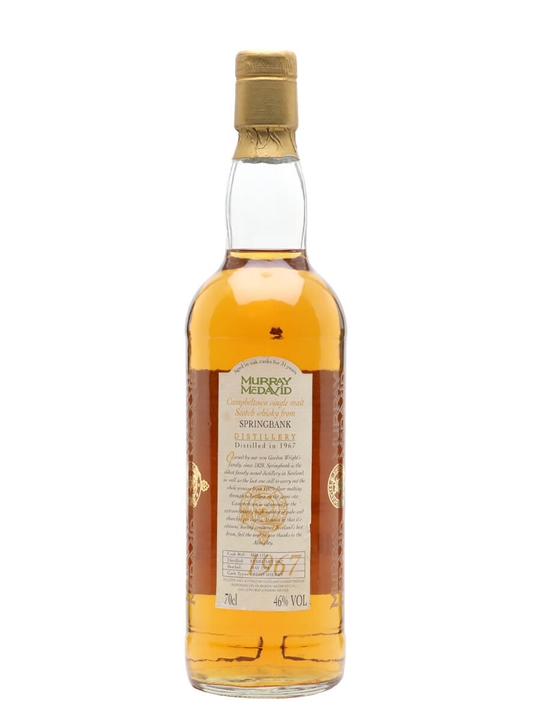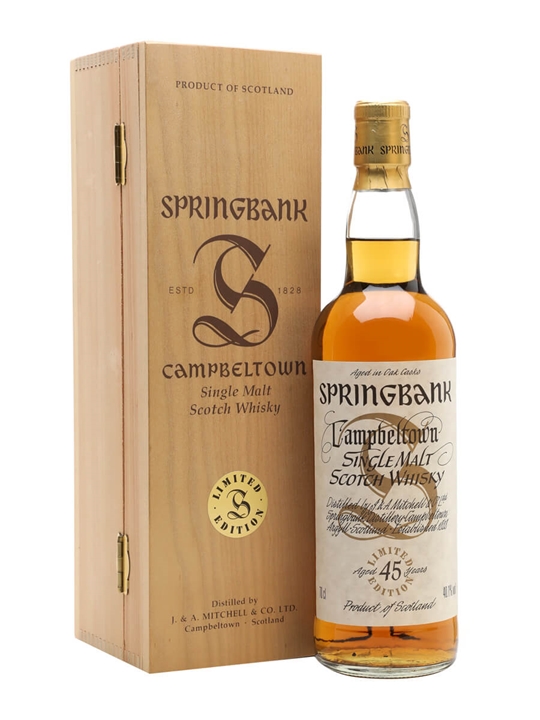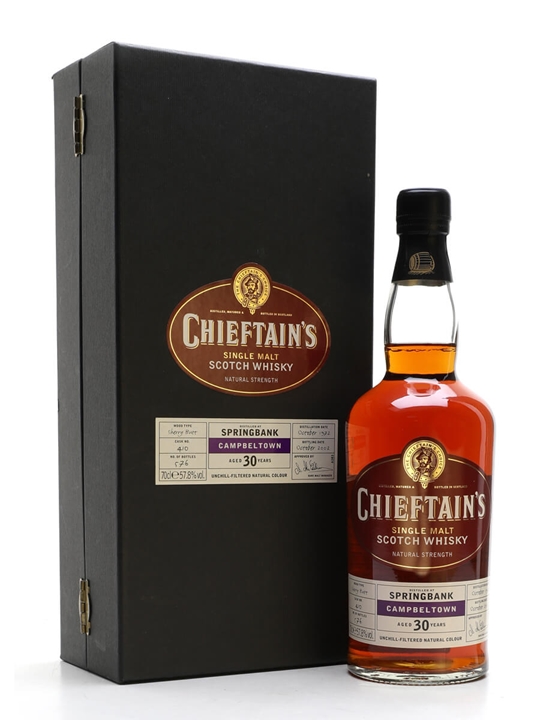

There are fewer than three working distilleries left in Campbeltown, a windswept spit of land on the Kintyre peninsula that once held more than thirty. To drink a Springbank from 1972 is to taste a place that has spent the last half-century refusing to disappear. This 30-year-old, drawn from a sherry cask and bottled at a formidable 57.8% ABV, carries the weight of that stubbornness in every drop.
Campbeltown whisky has always occupied its own strange corridor — neither Highland nor Lowland, neither fully peated nor clean. It sits at the crossroads, briny and slightly oily, shaped by Atlantic weather and a style of distilling that has never chased fashion. A 1972 vintage, matured for three decades in sherry wood, represents the kind of intersection that simply cannot be manufactured today. The cask and the spirit have had longer to negotiate than most marriages.
At 57.8%, this is not a whisky that asks permission. It arrives at full cask strength, unapologetic, daring you to add water or not. I'd recommend a few drops — not because it needs taming, but because the ABV can mask some of the subtlety that thirty years of sherry maturation will have built. This is old whisky, and old whisky rewards patience.
What to Expect
A Springbank of this age and cask type sits in rare territory. The distillery's characteristic maritime saltiness — that faint whiff of harbour rope and diesel that Campbeltown devotees chase — will have spent decades tangling with dark sherry influence. Expect density. Expect layers. A whisky distilled in the early 1970s was made before computers touched the process, before consistency was a corporate mandate. Every cask from this era is, in the truest sense, a one-off.
The sherry cask at this age will have contributed significant colour and richness, but with Springbank's famously varied production — they malt their own barley, they run different peating levels, they operate with a stubbornness that borders on the artistic — prediction only goes so far. That's part of the appeal.
The Verdict
At £2,250, this is a serious purchase, and I won't pretend otherwise. But consider what you're buying: a whisky distilled over fifty years ago, matured for three decades, from a distillery in a region that nearly died out entirely. Campbeltown's revival is one of Scotch whisky's great stories, and bottles like this are its primary documents. An 8.3 out of 10 reflects a whisky that delivers on its extraordinary promise — not perfection, perhaps, but something more interesting than perfection. Character. History bottled at cask strength.
This is a collector's dram, yes, but it would be a shame if it only ever sat behind glass. Springbank made whisky to be drunk.
Best Served
Pour neat into a tulip-shaped nosing glass. Let it breathe for at least fifteen minutes — thirty years in oak has earned it that courtesy. Add water sparingly, a few drops at a time, and watch how the spirit opens at each stage. This is an evening whisky, best shared with one other person and nowhere to be in the morning. If you can, drink it near the sea. Campbeltown always tastes better when you can hear the water.