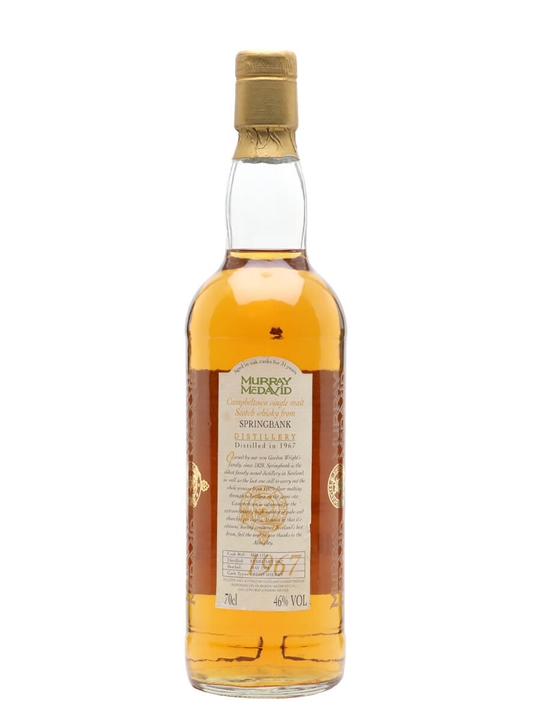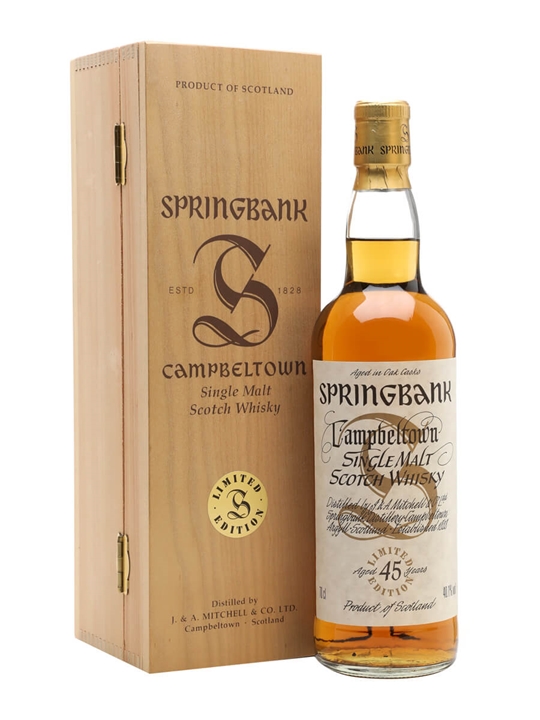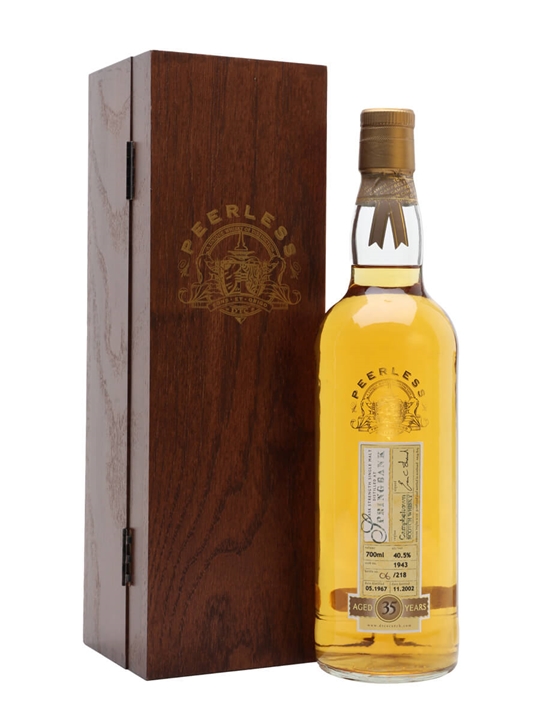
There are certain bottles that announce themselves before you've even broken the seal. The Springbank 1967, bottled by Duncan Taylor after thirty-five years in cask, is one of them. Not because it shouts — Campbeltown whisky rarely does — but because of what it represents: a liquid time capsule from a distilling region that was, in 1967, on the verge of near-extinction. Only two distilleries would survive the decades that followed. That this whisky exists at all feels like an act of quiet defiance.
I first encountered this bottling at a private tasting in Glasgow, tucked between younger, louder drams that seemed to shrink in its presence. Duncan Taylor, the independent bottler, has long had a gift for selecting exceptional single casks, and this 35-year-old expression — drawn from stock distilled during an era when Campbeltown's reputation still carried the weight of its Victorian heyday — is among their finest Campbeltown selections. At 40.5% ABV, it sits just above the legal minimum, a sign that the cask took its share over those three and a half decades. What remains is concentrated, unhurried, and unmistakably shaped by time.
What to Expect
Without diving into specific tasting notes, I can say this: a Springbank from this era carries the DNA of a distillery that has always done things its own way. Springbank is one of the few Scottish distilleries to handle every stage of production on-site, from malting to bottling. A 1967 vintage, aged for thirty-five years, will have been profoundly influenced by the wood — expect the kind of deep, layered complexity that only comes from extended maturation. Campbeltown malts of this age tend to offer a character that sits somewhere between the coastal salinity of Islay and the fruit-laden richness of Speyside, belonging fully to neither. The relatively gentle ABV suggests a whisky that has mellowed into something graceful rather than forceful.
The Verdict
At £3,250, this is not a casual purchase. But context matters. Springbank 1967 bottlings are increasingly scarce, and Duncan Taylor's reputation for cask selection means you are not gambling on an unknown quantity. This is a piece of Campbeltown's history in a bottle — distilled in a town that once housed over thirty distilleries and was reduced to a handful. For collectors and serious drinkers who understand what Campbeltown represents, the price reflects genuine rarity rather than marketing inflation. I score it 8.4 out of 10: a remarkable whisky from a remarkable place and era, held back only slightly by the lower bottling strength, which may leave those accustomed to cask-strength expressions wanting a touch more intensity. But what it lacks in power, it repays in poise. This is a whisky that has earned its years.
Best Served
Neat, in a tulip glass, with nothing but patience. Pour it and leave it for fifteen minutes. A whisky that has waited thirty-five years deserves at least that. If you're inclined, a few drops of cool, soft water — nothing more — will open it further, but I found it most rewarding untouched. Drink it slowly, ideally on a rain-lashed evening with the windows cracked open. Campbeltown was built on salt air and stubbornness, and both belong in the room when you're drinking something like this.