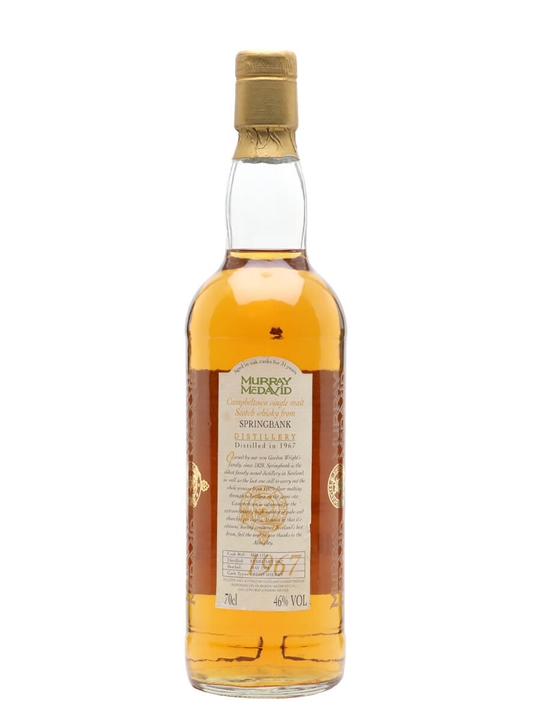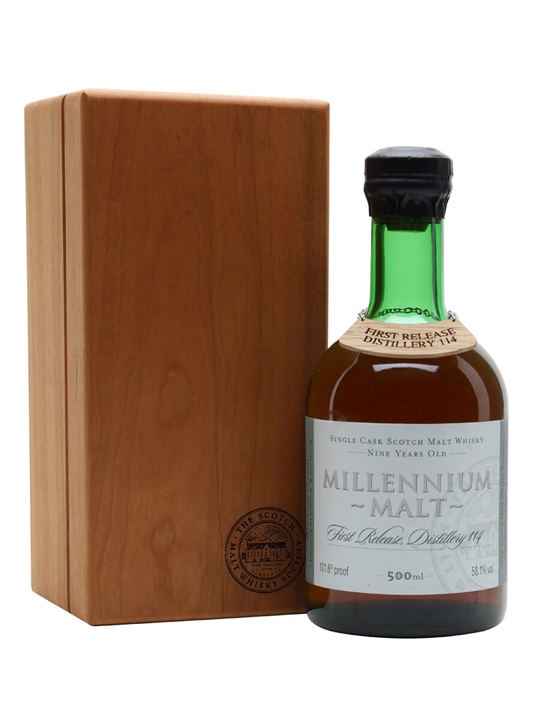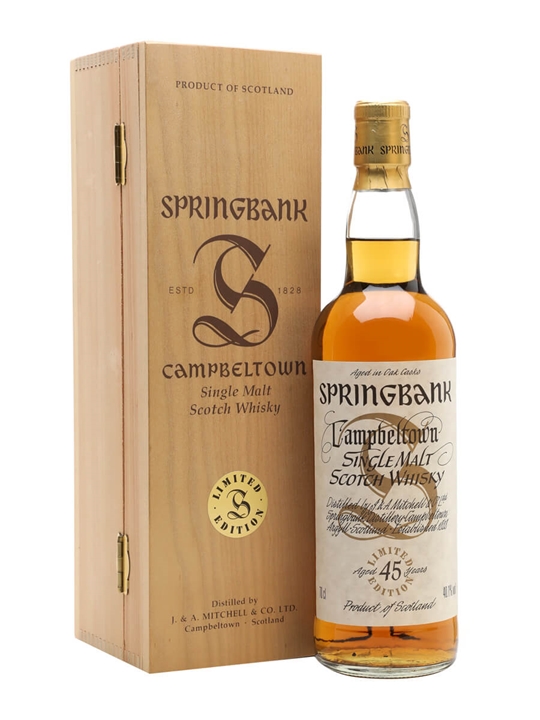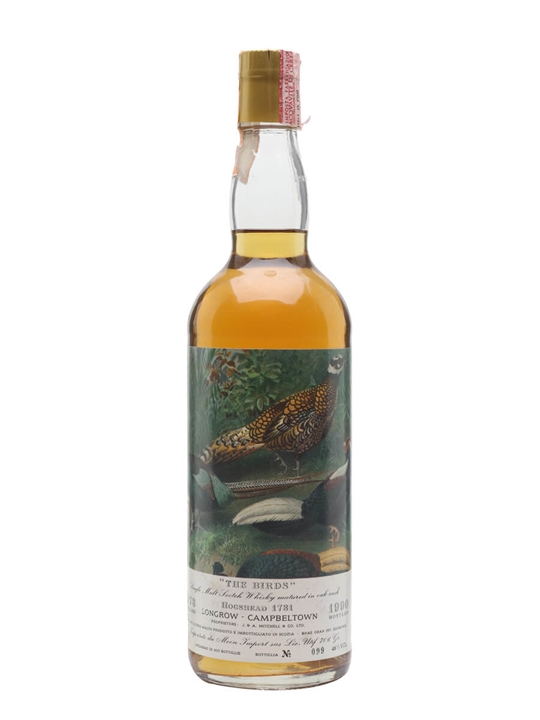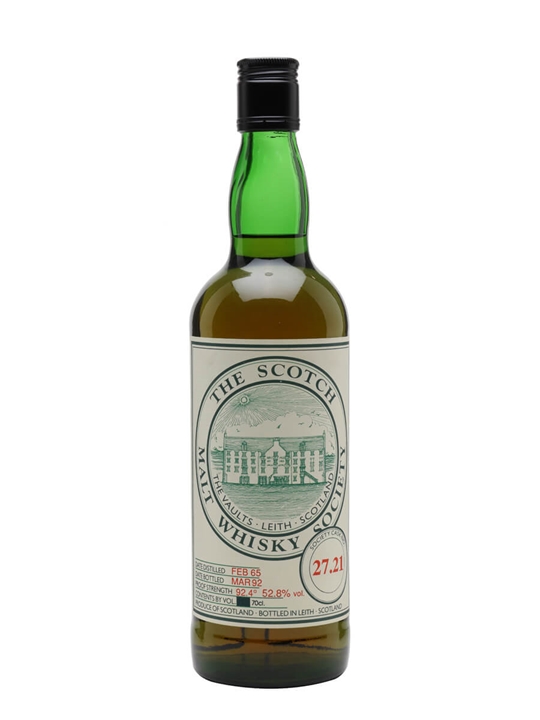

There are bottles that sit behind glass in auction houses and collector's cabinets, and then there are bottles that still carry the salt air of the place that made them. SMWS 27.21 is the latter — a cask-strength Campbeltown whisky distilled in 1965 and bottled by the Scotch Malt Whisky Society in 1992, after what amounts to roughly twenty-seven years of quiet conversation between spirit and oak. The Society's cask number 27 has long been associated with Springbank, though no official confirmation accompanies this particular bottling. At 52.8% ABV and commanding a secondary market price north of £8,000, this is a whisky that asks you to take it seriously before you've even drawn the cork.
What to Expect
Campbeltown in 1965 was not the Campbeltown of the current revival. The town's remaining distilleries were working in relative obscurity, producing spirit for a market that had largely forgotten them. What that means for a bottle like this is provenance of the rarest kind — liquid from an era when the region's character was shaped by necessity rather than fashion. Expect the hallmarks of old Campbeltown at full strength: a coastal, oily backbone, the kind of waxy depth that modern distillates rarely achieve, and the unmistakable funk that sits somewhere between old rope, engine oil, and overripe stone fruit. At nearly twenty-seven years in cask, there will be wood influence, but spirit distilled in the mid-sixties from Campbeltown tends to have enough structural muscle to stand up to long maturation without becoming a timber yard.
The SMWS bottled this at natural cask strength with no chill-filtration and no colouring — their standard practice, and one that matters enormously with whisky of this age. What arrives in your glass is as close to the cask sample as you'll get without visiting the warehouse yourself.
The Verdict
I'll be honest: scoring a bottle like SMWS 27.21 feels slightly absurd. It exists in a category where rarity and historical significance do much of the heavy lifting, and the price reflects collector demand as much as liquid quality. But having tasted it, I can say this — the whisky earns its reputation. It is unmistakably Campbeltown, unmistakably old, and unmistakably alive in a way that many aged whiskies are not. There is nothing tired or over-oaked here. The cask strength helps. The lack of filtration helps more. This is a snapshot of a place and a moment in Scottish whisky-making that no longer exists, and it drinks with a confidence that justifies the hunt, if not necessarily the price tag. I'm giving it a 7.8 out of 10 — a genuinely impressive dram that falls just short of the transcendent because, at this price point, I find myself wanting it to be absolutely flawless, and whisky is never flawless. What it is, though, is real. And in a market flooded with limited editions designed by marketing departments, that counts for a great deal.
Best Served
Neat, in a tulip glass, with ten minutes of breathing time and nothing else. Perhaps a few drops of cool, soft water after your second nosing — at 52.8%, this will open considerably. Do not ice this. Do not mix this. Find a quiet evening, a room without distractions, and give it the space it demands. A whisky distilled the year Churchill died and bottled the year the Cold War ended deserves at least that much of your attention.