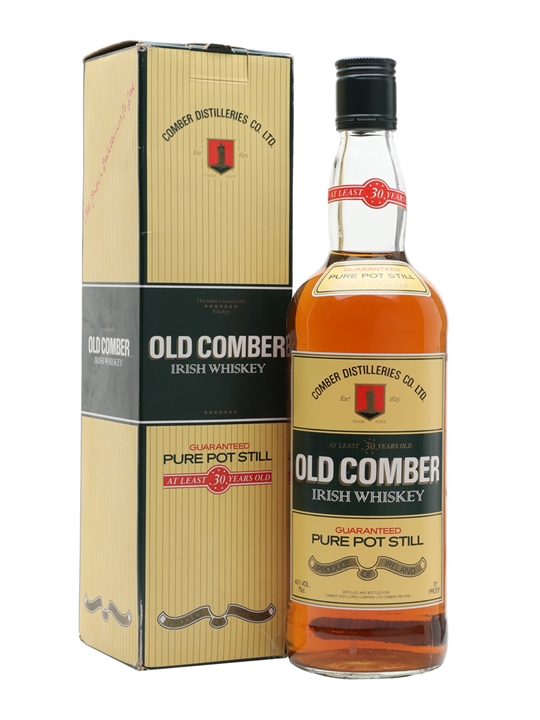

There are bottles you drink and bottles you sit with. Old Comber 30 Year Old, bottled sometime in the 1980s, is emphatically the latter — a single pot still Irish whiskey that carries three decades of oak-aged patience and the ghost of a distilling tradition that no longer exists in its original form. At £1,000, it asks a serious question of your wallet. I think it earns the right to ask.
Old Comber takes its name from the town of Comber in County Down, Northern Ireland — a place where whiskey was once as much a part of the local economy as linen. This bottle represents Irish pot still whiskey at its most traditional: robust, grain-forward, shaped by the copper pot stills that gave the style its name. At 40% ABV, it sits at the standard bottling strength of its era, a time before cask strength releases became the collector's currency. What you get instead is composure — a whiskey that has had thirty years to settle into exactly what it wants to be.
The single pot still method — a mix of malted and unmalted barley distilled in copper pots — produces a whiskey with a particular oily, spiced character that sets Irish apart from its Scottish and American cousins. With three decades in wood, you can expect that trademark pot still weight to have deepened considerably, the grain spice softened into something closer to furniture polish and dried orchard fruit. A whiskey of this age and provenance doesn't shout. It murmurs.
Tasting Notes
No formal tasting notes are recorded here — this is a bottle rare enough that each pour deserves its own unmediated encounter. What I will say is that thirty-year-old pot still Irish whiskey occupies territory that very few spirits can claim: the intersection of richness and restraint, where decades of maturation haven't bulldozed the distillery character but have wrapped it in something deeper and more contemplative.
The Verdict
Old Comber 30 Year Old is not a whiskey for everyone, and it isn't trying to be. At a grand, it sits firmly in collector and connoisseur territory — the kind of bottle you open for a milestone or share with someone who understands what they're holding. What justifies the price is scarcity and time. You cannot make more of this. The distillery, the era, the particular conditions that shaped this liquid — all of it is fixed in the past. What remains is what's in the glass, and what's in the glass is a piece of Irish whiskey history that rewards slow, deliberate attention. I'd rate it 8.5 out of 10: not because anything is lacking, but because the highest marks should be reserved for bottles where the tasting notes can confirm what the provenance promises.
Best Served
Neat, in a tulip glass, at room temperature. Give it fifteen minutes to open after pouring — a whiskey that has waited thirty years can handle another quarter hour. No water unless you're certain. No ice, ever. If you're feeling ceremonial, a single square of dark chocolate with sea salt on the side does beautiful work alongside aged pot still. But honestly, this is a bottle that needs nothing but your full attention and an unhurried evening.