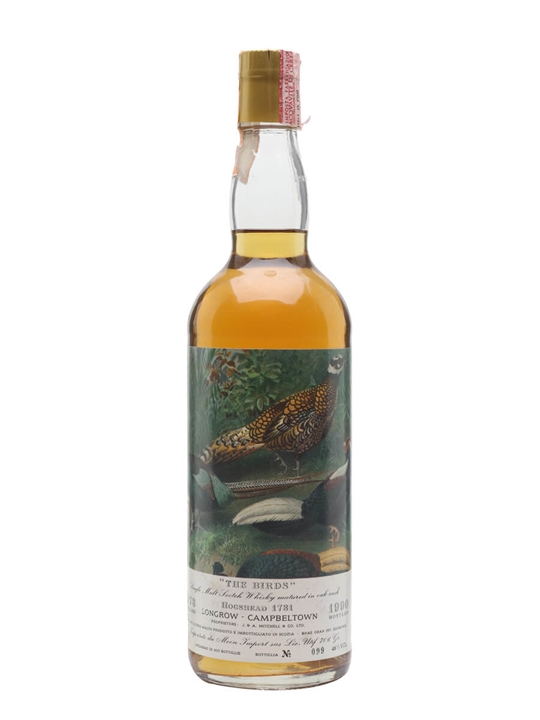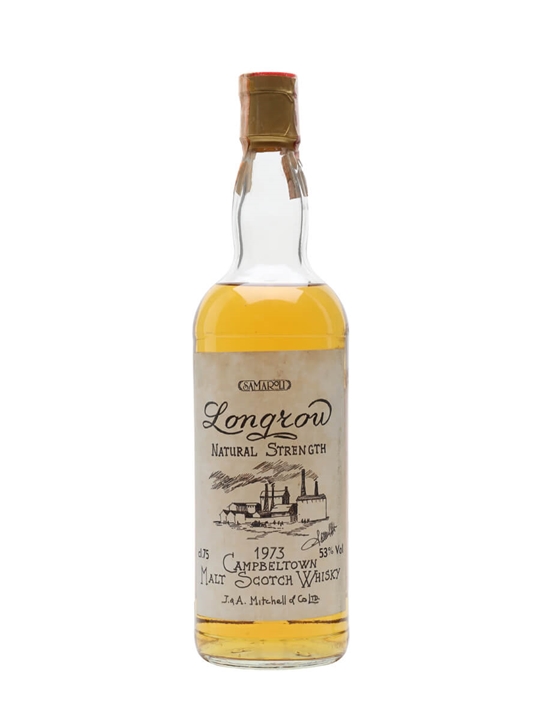

There are bottles you drink, and there are bottles that stop you mid-sentence. The Longrow 1973, bottled in 1985 at natural strength by the late, great Silvano Samaroli, belongs firmly in the second category. At £8,500, it demands more than casual interest — it demands a reason. And honestly, the reason is simple: this is a piece of Campbeltown history in liquid form, from an era when the town's whisky industry was barely clinging to life.
Campbeltown once claimed over thirty distilleries. By the time this spirit was filled into cask in 1973, that number had dwindled to a stubborn few. Longrow, the heavily peated expression from the town's most celebrated surviving operation, was itself a revival — a deliberate callback to the smokier style that once defined this salt-bitten corner of Kintyre. To hold a bottle distilled in that period is to hold something from the very edge of extinction.
And then there is Samaroli. The Italian independent bottler whose selections from the 1970s and 1980s have become some of the most sought-after whiskies on the secondary market. Samaroli had an uncanny ability to choose casks that aged into something transcendent, and the fact that this was bottled at natural cask strength — 53% — tells you he trusted the whisky to speak without dilution or interference.
What to Expect
Without specific tasting notes to hand, what I can say is this: Longrow of this vintage carries the unmistakable fingerprint of coastal Campbeltown peat — less medicinal than Islay, more maritime, threaded with brine and a certain earthiness that feels ancient. At twelve years in cask and 53% ABV, expect weight and conviction. This is not a whisky that whispers. The natural strength will carry oils and texture that a reduced bottling simply cannot replicate.
Samaroli's bottlings from this period are also known for exceptional cask selection — typically refill or inactive wood that lets the distillate lead rather than the oak. That restraint is part of what makes these bottles so revered among collectors and serious drinkers alike.
The Verdict
I'll be honest: the price is staggering. £8,500 places this squarely in the realm of collectors, investors, and those rare occasions when money becomes irrelevant to the experience. But within that rarefied world, this bottle earns its place. It represents a convergence of a near-lost region, a peated style that was barely surviving, and the curatorial genius of one of whisky's most respected independent bottlers. A 7.7 reflects that this is exceptional and historically significant, though the inaccessible price and the reality of provenance uncertainty — distillery unconfirmed on the label — keep it just short of the highest tier. For the collector who values story as much as liquid, few bottles tell one this compelling.
Best Served
If you are fortunate enough to open this, serve it neat in a tulip glass at room temperature. Add nothing. Give it twenty minutes to breathe after pouring — a whisky this old and this strong will unfold in stages. Pour small measures. Sit somewhere quiet, preferably with a view of the sea if you can manage it. Campbeltown whisky belongs to the coast, and so does the experience of drinking it.