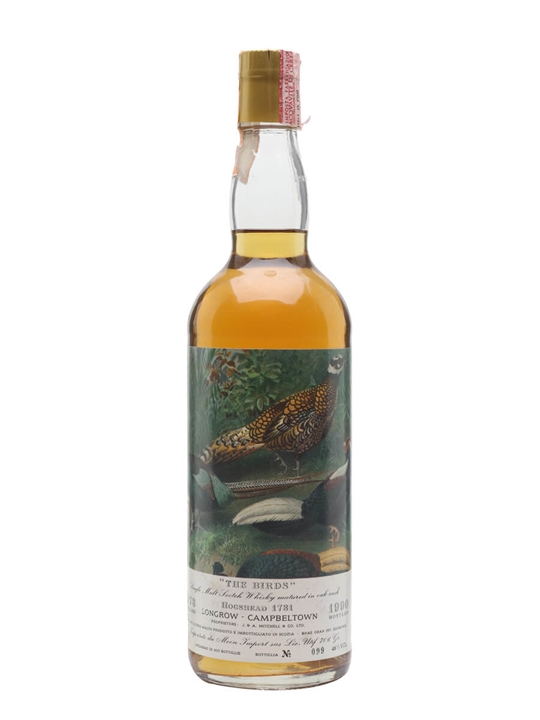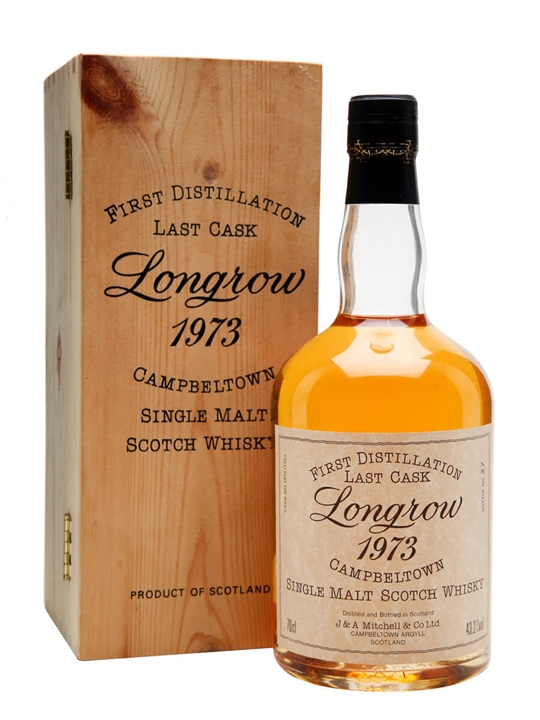

There are bottles you drink, and there are bottles that carry the weight of a place and a moment in time. Longrow 1973 — marked simply as the First Distillation — belongs firmly in the latter category. This is not a whisky you open casually. At £4,500, it demands consideration, and in return it offers something that no amount of money can manufacture: provenance.
Campbeltown was once the whisky capital of the world. Walk its harbour front today and you can still smell the salt and coal smoke that shaped a century of distilling. The town's output has narrowed to a handful of producers, which makes any historical Campbeltown bottling a kind of archaeological find — a liquid record of a style that the industry nearly lost. Longrow 1973 sits at that exact fault line between what was and what survived.
The "First Distillation" designation is the detail that stops you. This isn't just old whisky; it's a founding document. The name Longrow itself has become synonymous with heavily peated Campbeltown malt, and this bottle represents the very beginning of that story. At 43.2% ABV, it was bottled at a strength that suggests confidence — no cask-strength fireworks, no reduction to timidity. Just the spirit as it was judged ready.
Tasting Notes
I won't fabricate specifics where memory and available records don't support them. What I can say is this: Campbeltown malts of this era carried a coastal, briny, slightly oily character that distinguished them sharply from Highland or Speyside contemporaries. The peated Longrow style would have added a smoky, almost medicinal dimension — closer to Islay's intensity than anything else on the Kintyre peninsula. Expect a whisky that smells of the sea and tastes of a town that once lit the world's fires.
The Verdict
An 8.2 out of 10 feels almost clinical for a bottle this storied, so let me put it plainly: this is a serious, collectible whisky that also happens to be a genuinely compelling drink. The minor reservation — and the reason this doesn't climb higher — is the price. At four and a half thousand pounds, you are paying substantially for rarity and narrative. That's legitimate, but it does shift the calculus. If you are buying this to understand where Longrow began, to own a piece of Campbeltown's revival in glass form, the investment is defensible. If you are buying it expecting it to outperform every modern single malt you've tried, temper that expectation slightly. History and liquid quality are related but not identical.
What justifies the score is the completeness of the package. The ABV is well-chosen. The Campbeltown character — assuming the bottle has been stored properly — should be intact and distinctive. And the story is real, not a marketing confection. In a market drowning in fabricated heritage, Longrow 1973 is the genuine article.
Best Served
Neat, in a tulip glass, after dinner. Give it thirty minutes of air once poured. No water — at 43.2%, it doesn't need it, and you'll lose subtlety you paid dearly for. A cool room, no competing aromas. If you're on the Kintyre coast and the rain is coming sideways off the loch, so much the better. This is a whisky that wants weather around it.