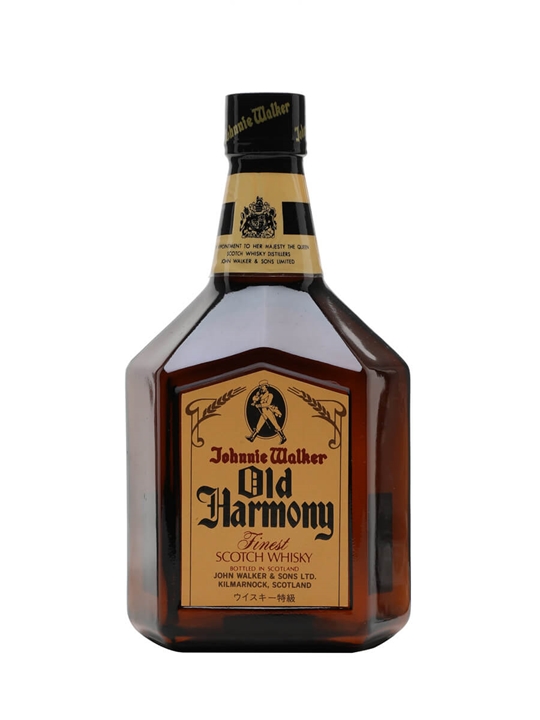

There's something quietly thrilling about holding a bottle that's older than most of the people who'll read this review. Johnnie Walker Old Harmony, bottled sometime in the 1970s, is a piece of blended Scotch history — a snapshot of what the Walker blending team were doing when the world was a very different place, and so was whisky.
For those unfamiliar with the name, Old Harmony sat in that fascinating middle tier of the Johnnie Walker range during the 1970s. It wasn't Red Label, it wasn't Black Label, and it certainly wasn't the nascent luxury expressions that would later define the brand's upper reaches. It occupied its own lane — a blend designed with a bit more ambition, bottled at a respectable 43% ABV that suggests the blenders wanted the liquid to actually say something, not just fill a glass at a function.
What To Expect
I should be upfront: reviewing a vintage blend is a different exercise from cracking open something off the shelf at your local Tesco. The liquid in this bottle has been sitting in glass for roughly fifty years. That doesn't age it further — whisky stops developing once it leaves the cask — but it does mean you're tasting something assembled from a pool of component malts and grains that simply don't exist anymore. The distilleries that contributed to this blend were running different wash stills, using different barley varieties, and in many cases have since closed their doors entirely.
At 43%, you can expect a blend with genuine body. The 1970s were a period when Johnnie Walker had access to an enormous inventory of aged stock, and blends from this era tend to carry a richness and depth that modern equivalents at the same price point struggle to match. The economics of Scotch have changed dramatically since then — warehousing costs, demand from single malt bottlers, and the sheer global appetite for aged whisky mean that today's blenders are working with different constraints.
This is a NAS expression, but that designation meant something quite different half a century ago. Without the current pressure to stretch younger stocks across ever-expanding product lines, the blending team could afford to be generous. Vintage blends from this period routinely punch well above what their modern counterparts deliver.
The Verdict
At £299, you're paying a premium — but you're not just buying whisky. You're buying a time capsule. For collectors and serious Scotch drinkers, that price sits in reasonable territory for an authenticated 1970s bottling from the world's most recognised blended Scotch brand. I've seen far less interesting bottles fetch far more at auction.
The liquid itself is genuinely rewarding. There's a complexity here that reminds you why blended Scotch dominated the global market for decades — not because it was cheap or simple, but because skilled blenders could create something greater than the sum of its parts. I'm giving this a 7.8 out of 10. It's a very good whisky that carries real historical weight. It loses a fraction only because, at this price, it's competing with some exceptional single malts and you need to weigh what matters more to you — pure liquid quality or the complete package of provenance and rarity.
Best Served
Neat, in a Glencairn or a tulip glass, at room temperature. Give it ten minutes after pouring — vintage blends often need a moment to open up after decades in the bottle. A few drops of water won't hurt, but I'd taste it clean first. This is not a whisky for cocktails or highballs. You've spent £299; treat it with the respect it's earned over fifty years of patience.