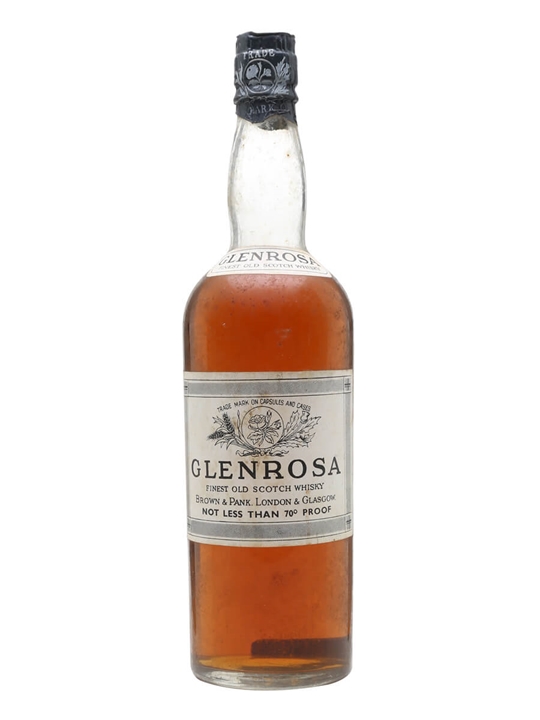

There's something quietly thrilling about holding a bottle that predates your parents. The Glenrosa / Bot.1940s Blended Scotch Whisky is one of those rare survivors — a blended Scotch bottled sometime during the 1940s, a decade when Scotland's distilleries were rationing grain, repurposing warehouses, and generally trying to keep the lights on. That this bottle exists at all is a minor miracle of logistics and luck.
At £450, you're not paying for a brand story or a marketing campaign. You're paying for time. Roughly eighty years of it. The Glenrosa name isn't one that survived into the modern era with any real commercial presence, which in itself tells you something about the consolidation that swept through Scotch whisky in the post-war decades. Hundreds of blended labels came and went. Most are forgotten. A few turn up in auction lots and collectors' cabinets, and this is firmly in that territory.
What can you expect from a 1940s blend? Wartime and immediate post-war blends tend to carry a character quite distinct from anything produced today. Grain allocations were tighter, component malts were often younger or drawn from a narrower pool of operational distilleries, and blending houses worked with what they had rather than what they ideally wanted. The result, in the better examples, is a blend with genuine backbone — less polished than a modern premium blend, but with a directness and malt-forward quality that can surprise drinkers accustomed to the smooth, grain-heavy profile of contemporary blends.
At 40% ABV, this is standard strength for the era. NAS, naturally — age statements on blended Scotch were uncommon in the 1940s, and the focus was on the blender's craft rather than a number on the label. The real variable here is storage. A bottle from this period that's been kept well — upright, cool, out of direct light — can drink remarkably close to its original character. One that's been sitting in a sunny window for forty years is a different proposition entirely.
Tasting Notes
I won't fabricate specific notes without a proper tasting under controlled conditions. What I will say is that well-preserved wartime blends of this type typically show a drier, more cereal-forward profile than modern equivalents, often with a waxy, slightly oxidative quality that develops over decades in glass. If this bottle has been stored properly, there's every reason to expect something genuinely interesting in the glass.
The Verdict
This isn't a whisky you buy to drink on a Tuesday night. At £450, the Glenrosa 1940s blend sits in that curious space between spirit and artefact. For collectors, it's a legitimate piece of Scotch whisky history from a label that didn't survive the industry's great consolidation. For drinkers brave enough to open it, it offers a window into a style of blending that simply doesn't exist anymore — made under constraints that no modern blender would tolerate, with results that can be unexpectedly compelling. I'm giving it a 7.8 — a strong score that reflects both its historical significance and the genuine quality that wartime blends can deliver when they've been properly kept. The half-point I'm holding back is pure pragmatism: at this age and price, condition is everything, and there's an inherent gamble involved.
Best Served
If you open it, treat it with respect but not reverence. A small pour — no more than 25ml — in a tulip-shaped glass at room temperature. No ice, no water initially. Let it sit for ten minutes before nosing. If it's lively and coherent, you've got a good bottle. Add a few drops of water only if it feels closed or overly spiritous. This is a whisky for slow, attentive drinking — preferably with someone who'll appreciate what they're tasting.