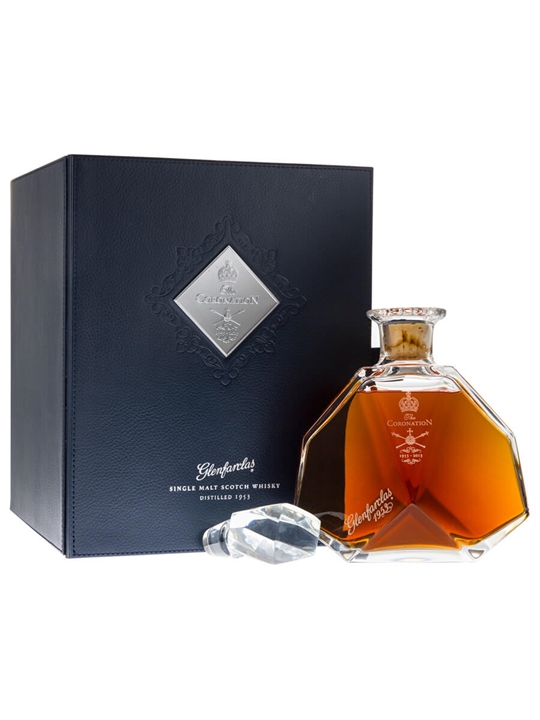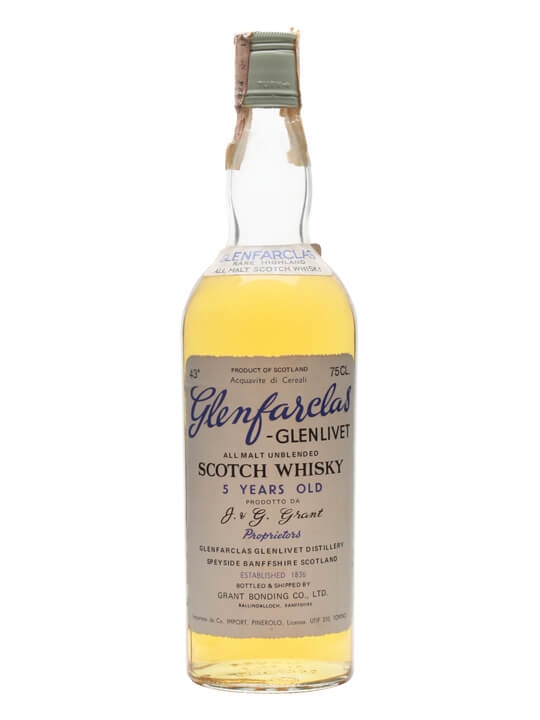

There are bottles you drink for the whisky, and there are bottles you drink for the history. The Glenfarclas 5 Year Old, bottled in the early 1970s, is that rare thing — a dram that delivers both. At five decades old as a bottling, this is a window into a different era of Scotch production, a time when Speyside distilleries were running at a pace and with materials that simply no longer exist. The barley was different. The water management was different. The warehouse conditions, the cask sourcing, the entire philosophy of maturation — all of it belongs to a world that predates the global whisky boom by a generation.
At 43% ABV, this was bottled at what was then a perfectly standard strength, before the industry's widespread shift toward 40% as the baseline. That extra three percent matters. It speaks to an era when bottlers weren't trimming every margin, and it gives the spirit a little more backbone than you might expect from a five-year-old malt.
Now, let's address the elephant in the room: five years is young. There's no getting around that. But age statements in the early 1970s carried a different weight. Cask quality was generally higher, sherry casks in particular were more readily available and more generously seasoned, and distilleries like Glenfarclas — a name synonymous with sherried Speyside character — were working with wood that modern producers would struggle to source at any price. A five-year-old from that period had access to flavour development that a five-year-old today simply cannot replicate.
Tasting Notes
I won't fabricate specific notes where my memory doesn't serve with certainty. What I will say is this: a Speyside malt of this vintage, at this strength, from a distillery with Glenfarclas's reputation for sherry-cask maturation, sits firmly in the rich, fruity, malt-forward tradition. Expect weight beyond its years, a sweetness that owes more to quality wood than to youth, and a directness that modern whiskies often soften out of existence. This is Speyside before the marketing departments got involved.
The Verdict
At £399, you are not paying for a five-year-old whisky. You are paying for a piece of distilling history — a snapshot of early-1970s Speyside in glass. For collectors, the appeal is obvious: original bottlings from this era are becoming genuinely scarce, and Glenfarclas carries enough name recognition to hold its value. For drinkers, the proposition is more personal. If you're curious about what Scotch tasted like before the industry consolidated and globalised, this is one of the more accessible entry points you'll find. I rate it 8.2 out of 10 — not for what it promises on paper, but for what it represents and, crucially, for the quality of spirit that era consistently produced. It earns its score through provenance and character, not age.
Best Served
Neat, at room temperature, in a tulip glass. If you've held onto a bottle this long — or paid this much to acquire one — you owe it the respect of tasting it without interference. A few drops of still water if you find the initial pour tight, but nothing more. This is a whisky for quiet attention, not cocktails.