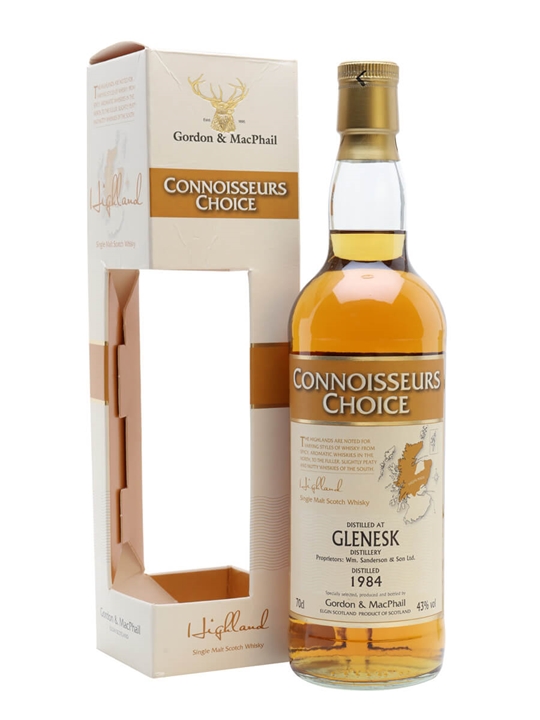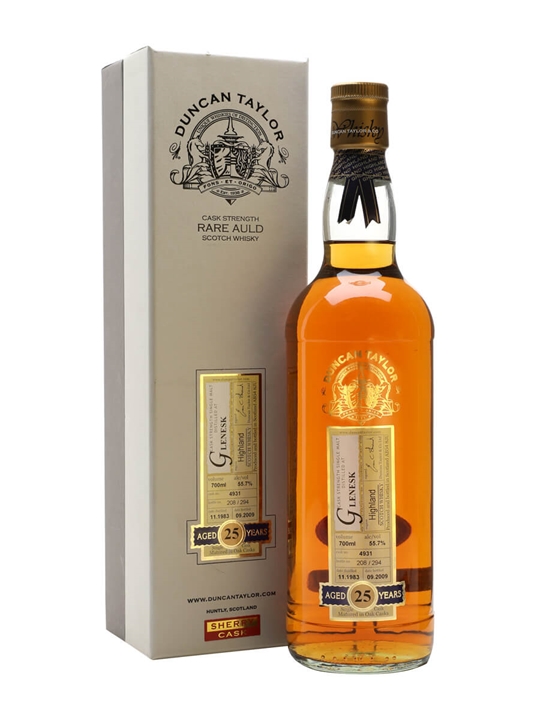

There are bottles that sit on the shelf and quietly demand your attention — not through flashy packaging or marketing bluster, but through sheer rarity and the weight of what they represent. Glenesk 1983, bottled by Duncan Taylor at 25 years old and a muscular 55.7% ABV, is precisely that kind of whisky. Glenesk is a ghost distillery, one of those Highland operations that fell silent in the mid-1980s and never reopened. Every remaining cask is a diminishing resource, and Duncan Taylor have long been among the most reliable independent bottlers when it comes to sourcing exceptional single casks from closed distilleries.
What makes a bottle like this compelling isn't nostalgia — it's the simple fact that time and oak have had a quarter of a century to do their work, and there's no going back for more. The 1983 vintage places this distillation squarely in the final chapter of Glenesk's productive life, which lends it a certain poignancy. At 55.7%, this was clearly bottled at cask strength or very near it, which tells you Duncan Taylor had enough confidence in the liquid to let it speak without dilution. That's a good sign.
Tasting Notes
I won't fabricate specific tasting notes where my memory doesn't serve with precision, but I can speak to what a 25-year-old Highland malt at this strength typically delivers. You should expect considerable depth — dried fruit, old oak, perhaps some waxy or honeyed character that long maturation in Highland warehousing tends to produce. The cask strength bottling means the texture will be full and oily on the palate, with layers that unfold slowly. A few drops of water will be your friend here; don't rush it.
The Verdict
At £600, this is not an everyday purchase, and I wouldn't pretend otherwise. But context matters. You are buying a 25-year-old single cask whisky from a distillery that no longer exists, bottled by one of the most respected independent houses in Scotland. Compare that to what certain operational distilleries charge for similar age statements with far less scarcity behind them, and the pricing starts to look rather more reasonable. This is a collector's dram as much as a drinker's dram, but — and this is important — it is emphatically worth drinking. Whisky exists to be opened. I have given this an 8.3 out of 10. It loses a fraction because the absence of detailed provenance on the cask type leaves me wanting slightly more transparency, but the quality of the liquid and the significance of the bottling more than justify the score. For anyone with a serious interest in Highland whisky history, this is a bottle that belongs in your collection.
Best Served
Neat, in a tulip-shaped nosing glass, with patience. Give it ten minutes to breathe after pouring. Then add a small splash of still water — no more than half a teaspoon — to open the cask-strength spirit without drowning it. This is not a whisky for cocktails or even a Highball. It deserves your full, undivided attention.