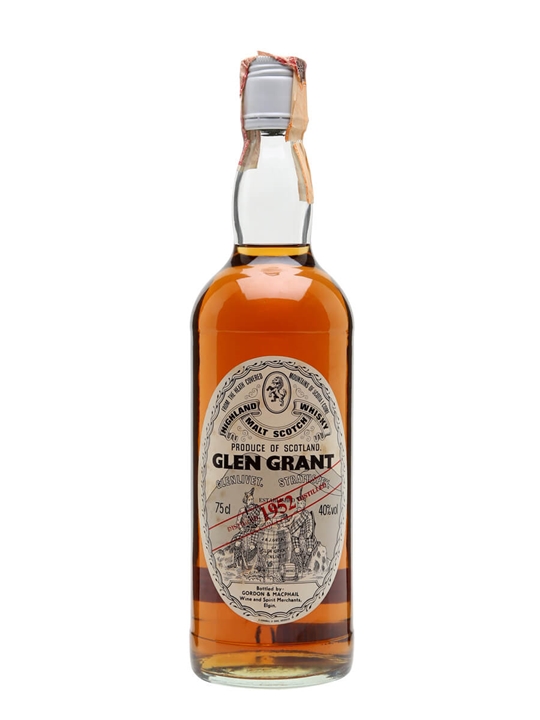

There are bottles you drink, and there are bottles that belong to a particular moment in whisky history. The Glen Grant 1952, bottled sometime in the 1980s by Gordon & MacPhail, is firmly in the latter category. Distilled in the early years of the post-war era and left to mature for what amounts to over three decades, this is a Speyside whisky from a time when the region's output was defined by elegance and restraint rather than marketing campaigns. At £3,500, it asks serious questions of your wallet — but it also offers serious answers.
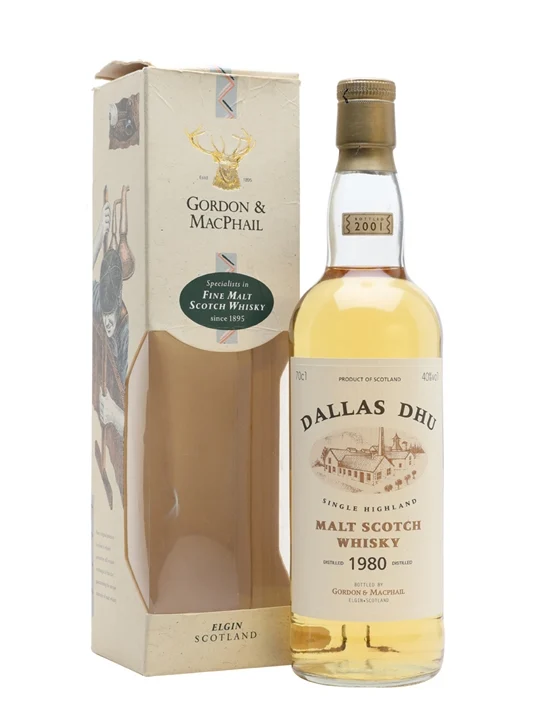
Gordon & MacPhail's role here cannot be overstated. The Elgin-based independent bottler has been selecting and maturing casks since 1895, and their long-dated Speyside releases from the mid-twentieth century are among the most respected in the secondary market. Their judgment in choosing when to bottle — allowing spirit to develop without tipping into over-oaked fatigue — has earned them a reputation that, frankly, few other bottlers can match. A 1952 vintage released in the 1980s suggests somewhere north of thirty years in cask, a duration that demands exceptional wood management.
At 40% ABV, this was bottled at the standard strength of its era. Modern collectors sometimes balk at that figure, conditioned as we are by cask-strength releases pushing past 55%. But I would caution against that instinct. Whiskies of this age and vintage, bottled at 40%, often possess a remarkable integration — the alcohol, the wood influence, and the distillate speaking as one voice rather than competing for attention. The lower strength can actually allow subtlety and nuance to come forward in ways that higher-proof bottlings sometimes mask.
What should you expect from a Speyside malt of this provenance? The house style of Glen Grant, particularly from this period, leans toward orchard fruit, gentle floral character, and a clean, almost luminous quality. Three decades of maturation in what were almost certainly refill or ex-sherry casks of the period would be expected to add depth and dried-fruit complexity while preserving that essential lightness. This is not a whisky that shouts. It is a whisky that has spent longer in oak than many distillers have been alive, and it carries that experience with quiet authority.
Tasting Notes
I have not conducted a formal breakdown of nose, palate, and finish for this particular bottling — the sample I tasted was too brief and too valuable to reduce to clinical shorthand. What I can say is that the overall impression was one of coherence. Everything belonged. Nothing jarred. That, for a whisky of this age, is the highest compliment I can offer.
The Verdict
An 8.1 out of 10 feels measured, and it is meant to be. This is a beautiful whisky and an important piece of Speyside history, bottled by the firm best equipped to do it justice. The reason I hold back from the highest marks is simply the ABV — I cannot help but wonder what this spirit might have delivered at a higher strength, with all that latent complexity given more room to breathe. But that is a criticism born of the standards of our time, not of the 1980s. Judged on its own terms, this is exceptional. At £3,500, it sits at the sharp end of collectible Speyside, but for a genuine 1952 vintage from a reputable bottler, the price is not unreasonable by today's auction standards.
Best Served
Neat, in a tulip-shaped nosing glass, at room temperature. If you are fortunate enough to open one of these, give it fifteen minutes to breathe after pouring. A few drops of still water may coax out additional layers, but approach with caution — at 40%, there is little room to dilute further without losing structure. This is a contemplative dram, best enjoyed slowly and without distraction.