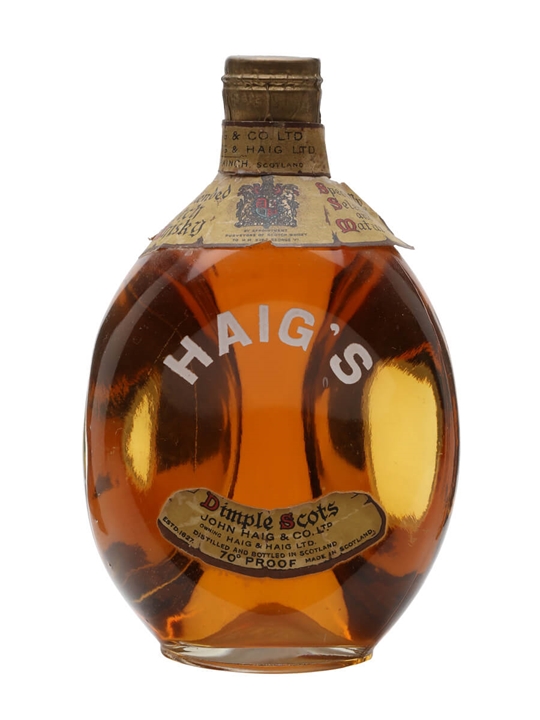

There's something quietly thrilling about holding a bottle that predates your own existence. This Dimple spring cap, almost certainly from the 1950s based on the closure style and label design, represents a period when blended Scotch wasn't fighting for shelf space against single malts — it was Scotch whisky, full stop. The Dimple brand, known in some markets as Haig Dimple or Pinch, was one of the heavyweight blends of the mid-twentieth century, and bottles from this era have become increasingly sought after by collectors and curious drinkers alike.
At £250, you're paying a premium that reflects rarity and age rather than any official bottling statement. This is a NAS blend at 40% ABV — standard for its time — but what makes it interesting is what 'standard' meant in the 1950s. The blending landscape was fundamentally different. Component malts were often older, grain whisky production was less industrialised, and the overall house style of most blends carried more weight and character than their modern equivalents. That's not nostalgia talking; it's simple economics. Whisky was aged longer because demand hadn't yet outstripped supply the way it would in later decades.
What to Expect
Without sitting down to a formal tasting session with verified provenance and ideal storage conditions confirmed, I'd be doing you a disservice to fabricate specific notes. What I can tell you is what this category of whisky typically delivers. Blended Scotch from this period tends to show a richness and depth that surprises people accustomed to modern blends. Think rounder, more malt-forward, with a texture that feels less hurried. The grain component in these older bottlings often integrates more seamlessly — less sharp, more honeyed. Fill level and storage history matter enormously with vintage bottles, so your experience will depend heavily on how well this particular bottle has been kept.
The Verdict
I'm giving this a 7.8 out of 10, and here's my reasoning. The score reflects the genuine appeal of drinking history — this is a well-regarded blend from a golden era of Scotch production, and bottles in good condition genuinely deliver something you cannot replicate with anything on the shelf today. I'm holding back slightly because at £250, you're paying a collector's premium, and there's always an element of uncertainty with vintage spirits. The whisky inside could be magnificent or it could have faded. That's the gamble, and it's part of the fun. For anyone with an interest in how blended Scotch used to taste before the category was squeezed by bean counters and marketing departments, this is a worthwhile investment. It's a conversation piece that you can actually drink, which puts it ahead of most things people spend £250 on.
Best Served
Neat, at room temperature, in a proper nosing glass. Give it ten minutes after pouring before you go near it — old whisky needs time to wake up. A few drops of water won't hurt if it feels closed off initially. This is not a cocktail ingredient. This is not a highball base. Pour it with respect, drink it with curiosity, and take your time. You won't get another bottle easily.