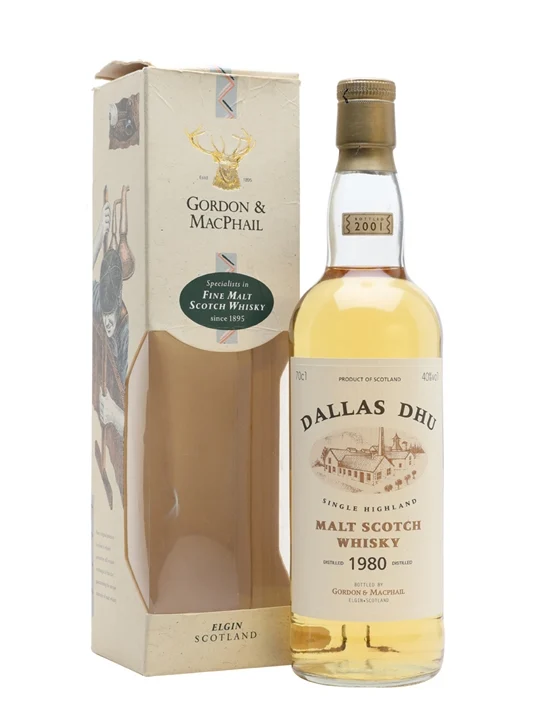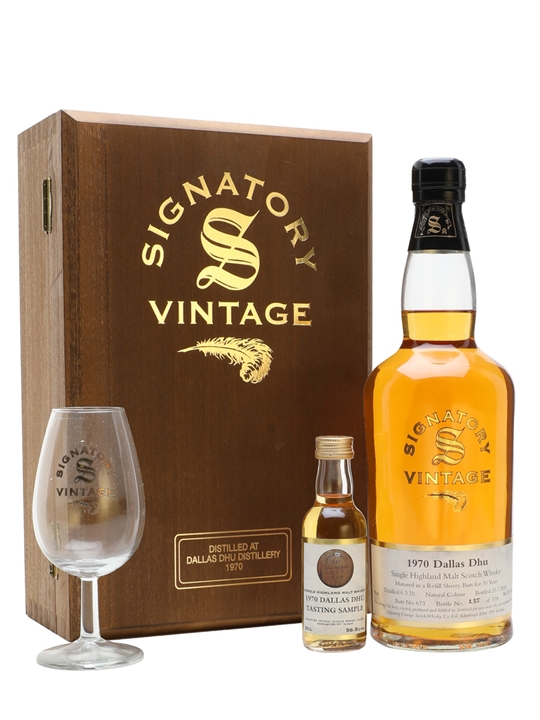

There are bottles that sit on a shelf and look impressive, and there are bottles that carry genuine weight — historical, liquid, emotional. The Dallas Dhu 1970 belongs firmly in the latter category. Distilled in 1970 and left to mature for three decades, this is a whisky from a distillery that no longer produces spirit. Every cask that remains is, by definition, irreplaceable. At cask strength of 56.5% ABV, this is not a whisky that has been diluted for mass appeal. It arrives as it was found, and that decision commands respect.
What to Expect
Dallas Dhu sits in the Speyside tradition — a region I know as well as any, and one that at its best delivers elegance alongside substance. A 30-year-old Speyside at natural cask strength is a rare proposition. Three decades in oak will have drawn out considerable depth: you should expect the kind of concentrated, layered character that only extended maturation can produce. The high ABV suggests this cask had real vitality left in it after all those years, which bodes well for intensity and structure rather than the thin, overly woody profile that can plague whiskies left too long.
The inclusion of a glass and miniature set is a thoughtful touch. It signals that this was bottled with the collector and the drinker in mind — not just one or the other. At £1,000, this is undeniably a serious purchase, but context matters. You are buying liquid from a distillery whose doors closed permanently. The supply is finite and shrinking with every bottle opened. That arithmetic is simple and unforgiving.
The Verdict
I score this 8.3 out of 10. That is a strong mark, and I give it with confidence. The combination of genuine age, cask strength bottling, and the sheer scarcity of Dallas Dhu spirit earns it. This is not a whisky you buy because a label told you to — it is a whisky you buy because you understand what it represents. Thirty years of patient maturation from a distillery that will never produce another drop. The ABV tells me this cask was carefully chosen; it retained its strength and, one expects, its character.
Where I hold back slightly is on value certainty. At this price point, I want to know precisely which cask, which bottler, and ideally have confirmed distillery provenance beyond any doubt. The presentation set adds appeal for collectors, but the whisky must ultimately justify itself in the glass. From everything I can assess — the age, the strength, the pedigree of the Speyside region — this is a bottle that rewards the serious whisky buyer. It is not an everyday dram. It is a marker of a time and place that no longer exists, bottled at a strength that refuses to compromise.
Best Served
A whisky of this age and strength deserves your full attention. Pour it neat and let it sit in the glass for five to ten minutes — at 56.5%, it needs that time to open. Then add a few drops of still water, no more. The water will unlock what thirty years of oak have built without washing it away. No ice, no mixers, no distractions. Find a quiet evening, take your time, and let the glass do the talking.