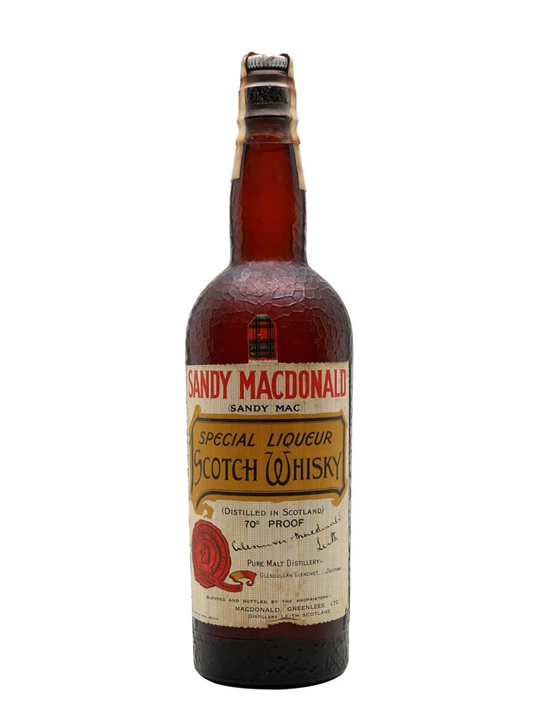

There's a particular thrill in holding a bottle that predates the modern Scotch whisky industry as we know it. Sandy Macdonald Blended Malt, bottled sometime in the 1940s, is one of those bottles. It sits in that fascinating category of pre-war and wartime-era Scotch that collectors chase not just for flavour, but for what it represents — a snapshot of an industry operating under entirely different conditions, with different barley, different yeast strains, and coal-fired stills that most distilleries abandoned decades ago.
Let me be clear about what we're looking at here. This is a blended malt, meaning it's a marriage of single malts with no grain whisky in the mix. The Sandy Macdonald name was a reasonably well-known brand in its day, though it never achieved the household recognition of a Johnnie Walker or Dewar's. The distillery or distilleries behind the blend remain unconfirmed, which is entirely typical of the era — branding was king, and provenance was something the trade worried about, not the consumer.
At £750, you're paying for history as much as liquid. That's worth acknowledging upfront. But here's the thing — 1940s blended malts genuinely do taste different from anything produced today. The peat levels in everyday malt production were higher, the fermentation was longer by necessity rather than design, and the casks available during and just after wartime were often older refill wood that had been pressed into extended service. The result, broadly speaking, is a style of Scotch that modern distillers simply cannot replicate, no matter how many heritage expressions they release.
What to Expect
Without confirmed tasting notes for this specific bottling, I won't fabricate what's in the glass. What I can say is that 1940s blended malts of this type typically present a profile quite alien to modern palates — drier, more austere, with a waxy texture and a subtle smokiness that runs through everything regardless of region. The 40% ABV was standard for the period and, given the density of flavour these old malts tend to carry, it works perfectly well. Don't let the bottling strength put you off.
The Verdict
I've scored this 8.3 out of 10, and my reasoning is straightforward. As a piece of liquid history, Sandy Macdonald from the 1940s is genuinely compelling. The blended malt category was less common then than blended Scotch, which makes this a slightly unusual find. The price is significant but not outlandish for a wartime-era bottle in good condition — I've seen far less interesting bottles from this period fetch more at auction. Where it loses a fraction of a mark is the uncertainty around provenance. Not knowing which distilleries contributed to the blend means you're buying on faith and era rather than pedigree, and at this price point, that matters.
For collectors of vintage Scotch, this is a serious bottle. For drinkers who want to understand how much the industry has changed in eighty-odd years, it's an education in a glass.
Best Served
If you're actually going to open this — and I'd argue you should, because whisky is for drinking — pour it neat into a tulip glass at room temperature. Give it a good fifteen minutes to open up before you nose it. Old whisky at 40% can be fragile, and rushing it does nobody any favours. A few drops of water if you feel it needs it, but start without. No ice. This isn't a cocktail ingredient. Treat it with the respect its age demands, but don't be so reverential that you forget to enjoy it.