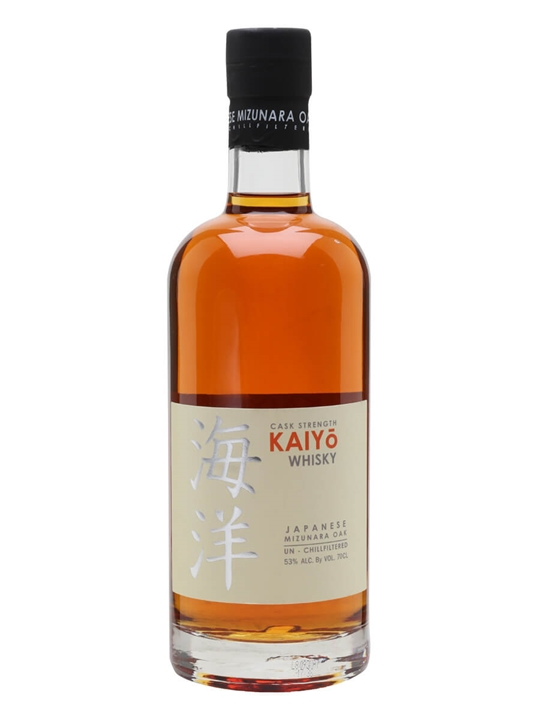

Kaiyo is one of those brands that generates a disproportionate amount of debate relative to its market share. A Japanese blended malt aged in Mizunara oak — that much is on the label. Beyond that, details get thin. No confirmed distillery, no age statement, and a price point that puts it squarely in competition with named single malts from established houses. At cask strength, 53% ABV, this is Kaiyo asking to be taken seriously.
And here's the thing: it largely deserves to be.
The Mizunara angle is the obvious talking point. Japanese oak casks are notoriously difficult to work with — porous, prone to leaking, expensive to source — and they impart a character that's genuinely distinct from American or European oak. There's a sandalwood-incense quality that Mizunara is known for, a certain aromatic spice that you simply don't get from bourbon barrels. Whether Kaiyo's use of Mizunara here is full maturation or finishing isn't specified, but the oak influence is real and present. This isn't marketing theatre.
What to Expect
At 53%, this pours with weight. Blended malts in this ABV range tend to reward patience — a splash of water opens things up considerably, and I'd recommend experimenting. The cask strength bottling suggests Kaiyo wants you to engage with the whisky rather than passively sip it, and that's a welcome approach. Japanese blended malts at natural strength remain relatively uncommon on UK shelves, which gives this bottle a genuine point of difference.
The category itself — Japanese blended malt — occupies interesting territory. You're getting malt whisky from Japanese distilleries (plural, by definition), married together and shaped by that Mizunara maturation. It sits in the space between the precision of a single malt and the blender's art of balancing complementary components. For anyone who finds single malts occasionally one-dimensional, a well-constructed blend at cask strength can be a revelation.
The Verdict
At £101, Kaiyo Mizunara Cask Strength is not an impulse purchase. But context matters. Named Japanese single malts with age statements routinely command two or three times this price, and many of those are bottled at a tame 43%. What you're getting here is an uncompromising bottling with genuine Mizunara influence at a price that, by the distorted standards of Japanese whisky in 2026, represents reasonable value.
The lack of transparency around sourcing will irritate purists, and I understand that. But I've always judged whisky by what's in the glass, not what's on the press release. What's in this glass is a confident, well-structured blended malt with character and enough complexity to justify multiple returns to the bottle. I'm scoring it 7.9 — a strong showing that falls just short of exceptional, held back slightly by the NAS opacity but lifted by genuine quality and distinctiveness.
If Kaiyo ever decide to pull back the curtain on their sourcing, this could easily tick higher. For now, the liquid does enough talking on its own.
Best Served
Pour it neat first, then add water gradually — five or six drops at a time — until you find the sweet spot. This whisky changes character meaningfully with dilution, and finding your preferred balance is half the pleasure. On a cooler evening, it works beautifully in a simple hot toddy with honey and lemon, where the Mizunara spice adds an unexpected layer. Avoid drowning it in ice; you'll lose the oak complexity that you're paying for.