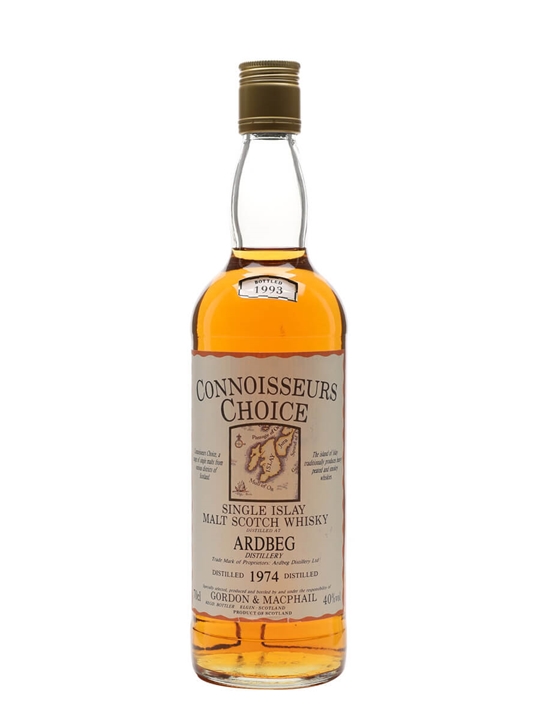

There are bottles you drink and bottles you sit with. The Ardbeg 1974, bottled in 1993 under Gordon & MacPhail's Connoisseurs Choice label, belongs firmly in the second category. This is whisky from a period when Ardbeg was operating intermittently, its future genuinely uncertain — years before Glenmorangie would step in and restore the distillery to full production. What ended up in this bottle is, in a real sense, liquid from a distillery that nearly ceased to exist.
I should be upfront: at £1,350, this is not a casual purchase. It is a collector's bottle, a piece of Islay history bottled at a modest 40% ABV under the old Connoisseurs Choice style — no cask strength theatrics, no limited-edition packaging. Gordon & MacPhail selected this cask and let it speak at the standard strength they favoured in that era. Whether that bottling strength flatters or constrains the whisky is a question every drinker will answer differently, but I'd argue there's something honest about it. This is how independent bottlers worked in the early nineties: find good casks, bottle them simply, move on.
What to Expect
Ardbeg from the 1970s carries a reputation that borders on mythology among peat enthusiasts. The distillery's output during this decade — when production was sporadic and the maltings were still in use — tends to show a different character from the post-revival expressions most of us know. Expect the hallmarks of old Islay: a maritime quality, the particular weight that extended maturation in the pre-chill-filtration era tends to produce, and whatever magic happens when peat and oak negotiate over nearly two decades.
The Connoisseurs Choice label tells you this was selected for quality rather than rarity, even if time has made it rare. Gordon & MacPhail's track record with Islay casks from this period is strong, and their nose for good wood is well documented.
The Verdict
I'm giving this a 7.9 out of 10, and I want to explain why that number is generous rather than reserved. The 40% ABV is, for me, the single limiting factor. A cask from this distillery, from this vintage, bottled at natural strength would almost certainly command both a higher price and a higher score. But what's in the glass is still unmistakably Ardbeg from a golden period — and that alone puts it ahead of most whisky you'll encounter in a lifetime. The historical value is real. The drinking experience, based on everything we know about casks of this profile, should reward patience and attention. This is a bottle for someone who understands what they're holding.
Best Served
Neat, in a tulip glass, after dinner. Give it twenty minutes to open — whisky of this age and provenance changes in the glass more than you'd expect. A few drops of soft water if you like, but no ice. Pour small. Sit with it. If you're on Islay when you open it, so much the better — there's something right about drinking a whisky within earshot of where it was made, especially one that carries the memory of a distillery fighting for its life.